Edwardian pearl brooches are ornamental jewelry pieces associated with the reign of King Edward VII, conventionally dated from 1901 to 1910, and with the wider Belle Époque design movement. Their combination of luminous pearls, platinum, diamonds, lace-like metalwork, bows, garlands, and floral motifs explains why they remain symbols of timeless elegance. Museum collections such as those of the Victoria and Albert Museum and the Metropolitan Museum of Art show how Edwardian jewelers used platinum’s strength to create delicate openwork, while the Gemological Institute of America confirms that pearls are valued through characteristics including size, shape, color, luster, surface quality, nacre quality, and matching. These features make an Edwardian-inspired pearl brooch both a historically informed accessory and a versatile modern heirloom.
Edwardian Pearl Brooches Define Timeless Elegance
Edwardian pearl brooches may be defined as brooches designed during, or closely inspired by, the Edwardian era and characterized by pearls combined with precious metals and period-style ornament. The Metropolitan Museum of Art describes Edwardian jewelry through its refined use of platinum, diamonds, and elaborate naturalistic motifs, while the Victoria and Albert Museum identifies the period with lightness, intricacy, and the influence of French courtly and Belle Époque taste.
The defining attribute is not simply the presence of a pearl. It is the relationship between pearl, setting, proportion, and motif. A single drop pearl can create restraint; a graduated row can establish rhythm; and a cluster of seed pearls can produce the lace-like effect associated with Edwardian design. Because the conventional Edwardian period spans approximately 1901–1910, a jewel described as “Edwardian-inspired” may borrow its visual language without claiming to be an original antique from that decade.
Pearl and Platinum Construction
Platinum is a key material in Edwardian-inspired brooches because its strength allows jewelers to use fine wires, millegrain edges, pierced panels, and open settings while supporting diamonds and pearls. The resulting surface appears airy rather than heavy. White gold may provide a more accessible modern alternative, but platinum offers the closest material connection to many high-style Edwardian jewels.
The Gemological Institute of America evaluates pearls through seven recognized value factors: size, shape, color, luster, surface quality, nacre quality, and matching. These criteria are especially relevant to brooches, where several pearls may need to appear visually consistent. Luster is often the most immediately noticeable quality because a sharp, reflective surface gives the brooch its characteristic glow.
Diamond, Seed-Pearl, and Enamel Accents
Edwardian-inspired designs commonly pair pearls with diamonds, seed pearls, or carefully placed enamel. Diamonds create flashes of contrast around a soft pearl center, while seed pearls produce a continuous beaded texture. Pale blue, green, or white enamel can introduce the subtle color associated with garland and floral jewelry without overwhelming the pearls.
A useful design metric is visual proportion: the brooch should have a clear focal pearl or central motif, supporting accents that guide the eye outward, and a balanced outline. A crowded arrangement can lose the lightness that distinguishes Edwardian style. Historical examples in the Metropolitan Museum of Art demonstrate how negative space and repeated curves were used to keep elaborate jewels visually delicate.
Edwardian Pearl Brooch Styles and Their Historical Hyponyms
The broad category of Edwardian pearl brooches includes several recognizable subtypes. These hyponyms help shoppers, collectors, and designers distinguish a restrained bar brooch from a romantic bow, a floral spray, or a moving trembler. Each form expresses elegance differently while retaining the era’s preference for graceful symmetry and refined detail.
Bow and Ribbon Brooches
Bow brooches use loops, tails, and gathered forms to suggest folded ribbon. Pearls may sit at the center, trace the bow’s outline, or hang as small drops. The motif reflects the Edwardian taste for feminine ornament and can range from a compact daytime pin to a larger evening jewel.
For a contemporary wardrobe, a bow brooch works particularly well on a lapel, velvet jacket, silk scarf, or high neckline. Its recognizable silhouette provides historical character without requiring a full period costume.
Garland and Floral Brooches
Garland brooches use linked swags, leaves, flowers, and foliage to create a continuous line. Floral brooches focus more directly on blossoms, petals, and sprays. Both styles reflect the early twentieth century’s interest in naturalistic ornament and can incorporate round pearls, bouton pearls, seed pearls, and diamond accents.
The floral category is especially adaptable because it can be scaled to different proportions. A petite spray suits a blouse or cardigan, while a larger garland can anchor a bridal bouquet-inspired ensemble or formal evening coat. The Victoria and Albert Museum’s jewelry holdings illustrate the period’s preference for botanical forms rendered with unusually fine metalwork.
Bar, Lavaliere, and Pendant Brooches
A bar brooch is a linear form, often finished with a central pearl, diamond cluster, or suspended drop. A lavaliere-style brooch extends downward through a pendant element, creating movement and a longer vertical line. These forms are useful for modern styling because they can be worn horizontally across a lapel or vertically on a scarf or dress.
Their elongated proportions also demonstrate an important Edwardian principle: elegance can come from direction as much as decoration. A narrow bar emphasizes the shoulder line, while a pendant brooch draws attention toward the neckline without requiring a necklace.
Trembler and Convertible Brooches
A trembler brooch includes a flexible or spring-mounted element that moves when the wearer does. The motion gives pearls and diamonds additional sparkle. Convertible brooches are designed to serve more than one function, such as becoming a pendant or separating into smaller pins.
These designs are historically significant because they combine engineering with ornament. When evaluating an antique or antique-inspired trembler, inspect the moving components, pin stem, clasp, and soldered joints carefully. Movement should be intentional and secure rather than loose or structurally unstable.
Edwardian Pearl Brooch Materials and Authentication
Material identification is central to distinguishing an authentic Edwardian jewel from a later reproduction. An original piece may show platinum, gold, silver, or mixed-metal construction, along with natural pearls, early cultured pearls, or imitation materials depending on its date and quality. A modern piece may accurately reproduce the silhouette while using freshwater pearls, laboratory-grown diamonds, recycled gold, or contemporary platinum.
Natural, Cultured, and Imitation Pearls
Natural pearls form without human intervention, cultured pearls are grown with human assistance, and imitation pearls merely resemble pearls through a coating or manufactured surface. The GIA emphasizes that pearl identification should rely on professional testing rather than appearance alone. Surface shine, color, and shape can suggest quality, but they cannot independently establish origin.
For buyers, documentation is more reliable than informal home tests. A laboratory report can help identify whether pearls are natural, cultured, or imitation and may also clarify treatments. Avoid rubbing pearls against teeth or using abrasive tests, since such practices can damage the surface and do not provide dependable authentication.
Hallmarks, Construction, and Provenance
Hallmarks can provide evidence about metal purity, maker, or place of manufacture, but they must be interpreted alongside construction and provenance. A genuine period brooch may display hand-finishing, irregularities consistent with age, an old-style clasp, and wear in appropriate locations. However, age alone does not prove authenticity, and a convincing reproduction may imitate antique findings.
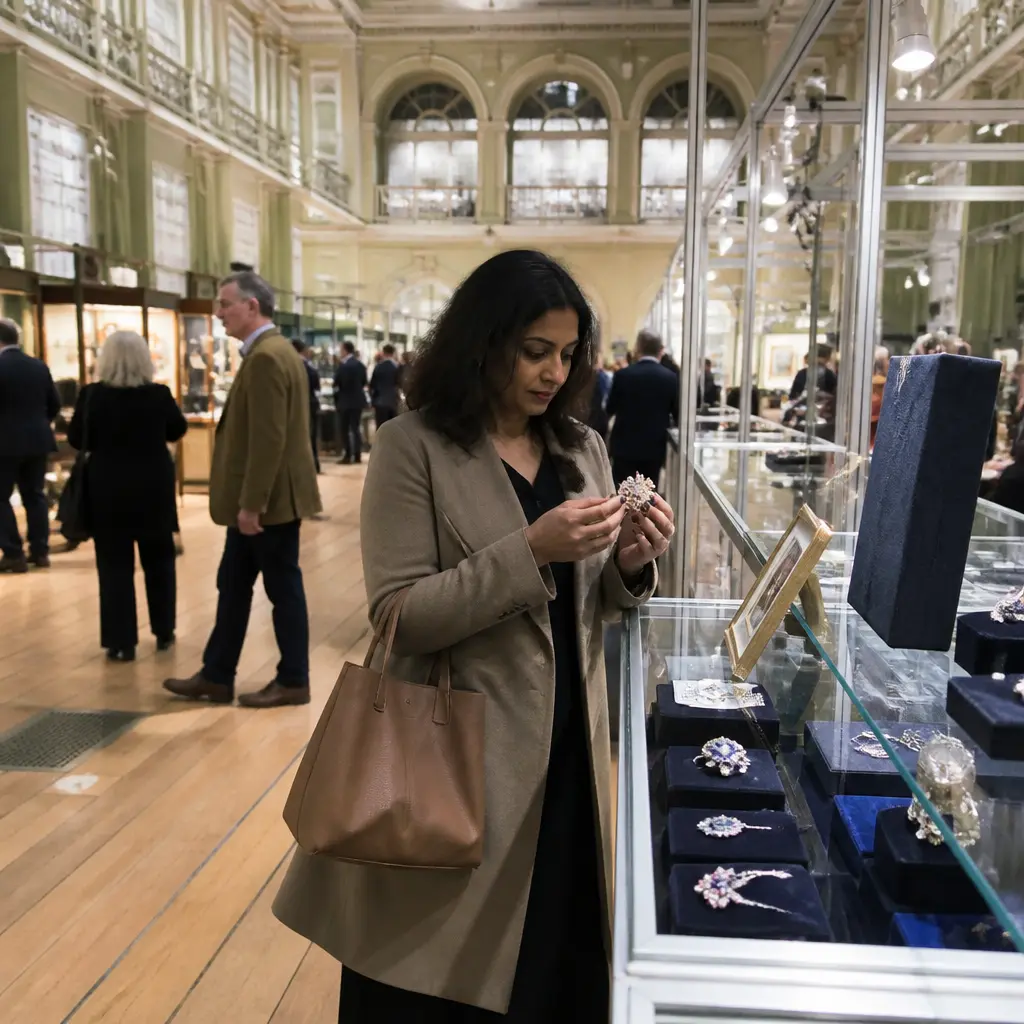
The strongest evaluation combines a specialist’s physical inspection, gemstone testing, hallmark research, and a documented ownership history. Auction-house descriptions, museum comparisons, insurance appraisals, and independent gemological reports are useful forms of supporting evidence.
How to Wear Edwardian Pearl Brooches Today
Edwardian pearl brooches are versatile because their scale and shape can connect formal jewelry with everyday clothing. A small bar brooch can secure a scarf, a bow can accent a blazer, and a floral spray can refresh a simple black dress. Wearing one significant brooch rather than layering several unrelated pieces usually preserves the period’s controlled elegance.
Daytime Styling
For daytime, place a brooch on a tailored lapel, knit cardigan, silk scarf, or high-neck blouse. White or cream pearls harmonize with neutral fabrics, while silver-toned metal suits cool colors such as navy, gray, and pale blue. A smaller brooch is generally more practical for work because it adds polish without dominating the outfit.
Bridal and Evening Styling
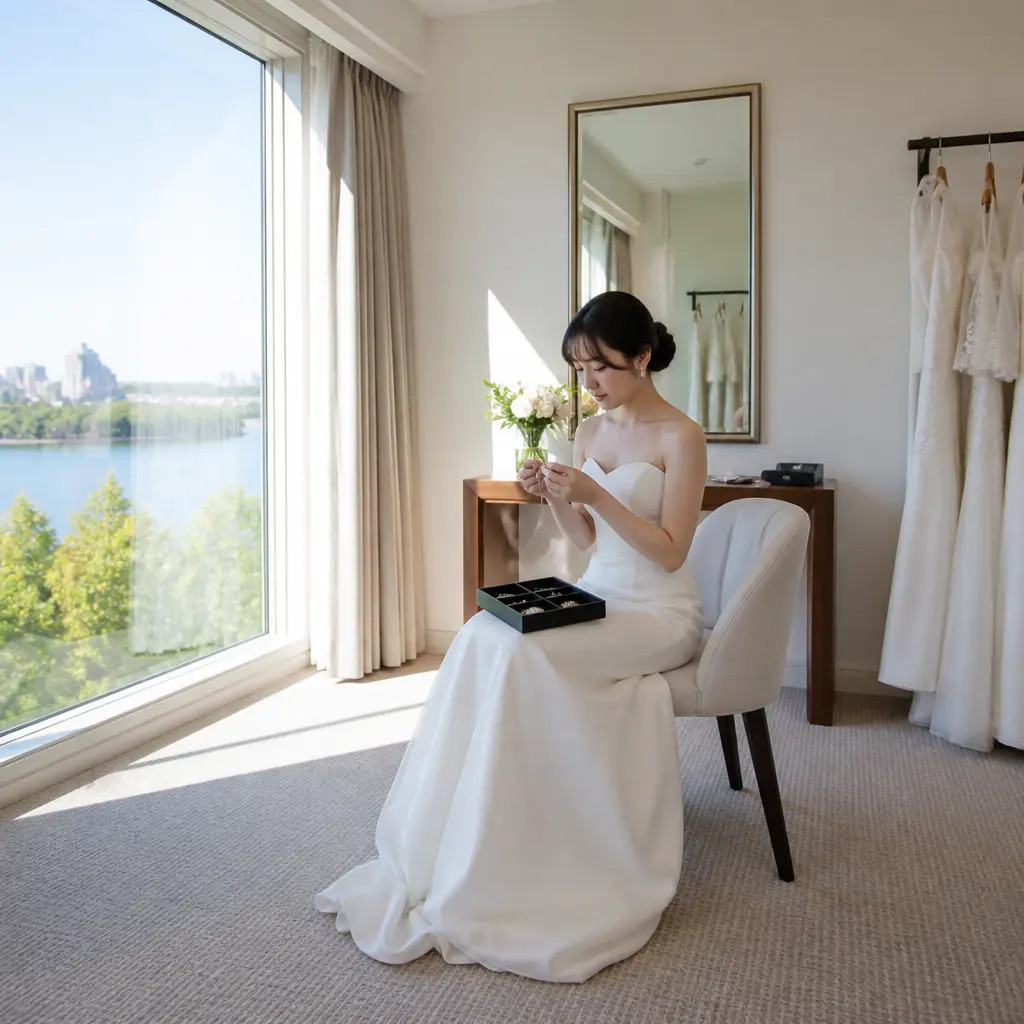
Pearl brooches complement bridal and evening clothing because their soft luster photographs gently and works with satin, silk, lace, and velvet. A brooch may be attached to a bouquet ribbon, sash, shoulder, or hair accessory, provided the fastening is secure and the fabric can support its weight.
For formal styling, coordinate rather than exactly match the brooch with other jewelry. Repeating one element—such as pearls, platinum color, or floral shape—creates cohesion while leaving the brooch as the focal point.
Care and Storage
Pearls are comparatively soft and can be damaged by cosmetics, perfume, perspiration, abrasive cleaners, and prolonged exposure to heat or dryness. Put on a brooch after applying fragrance and cosmetics, wipe it gently with a soft cloth after wear, and store it separately from harder gemstones that could scratch the pearl surface.
Secure storage is particularly important for antique brooches. Keep the piece in a fabric-lined case, avoid forcing an old clasp, and have a qualified jeweler inspect fragile mounts or moving trembler mechanisms. Professional cleaning should be conservative, especially when the brooch contains aged enamel, loose pearls, or delicate platinum work.
Why Edwardian Pearl Brooches Remain Relevant
Edwardian pearl brooches remain relevant because they unite historical narrative, wearable design, and material symbolism. The era’s approximately ten-year conventional span produced a vocabulary that still feels modern: open space, light-colored metals, organic forms, and jewelry that can be worn in multiple positions. Their enduring appeal is also practical; a brooch can be transferred between garments, generations, and occasions more easily than many fixed-format jewels.
When selecting an Edwardian-inspired pearl brooch, prioritize proportion, pearl luster, secure construction, and a design that fits the wearer’s existing wardrobe. Collectors should add provenance and professional authentication to that checklist. Readers interested in deeper study can compare museum examples, consult gemological education from the GIA, and review specialist auction catalogues before purchasing an antique.
In summary, Edwardian pearl brooches are defined by refined pearl-and-metal construction, expressed through bow, garland, floral, bar, lavaliere, trembler, and convertible forms. Their historical roots explain their elegance, their gemological characteristics support informed buying, and their adaptable styling keeps them meaningful in contemporary wardrobes. Choosing and caring for one thoughtfully turns a decorative accessory into a durable connection between Edwardian craftsmanship and modern personal style.
Sources: Victoria and Albert Museum, “Jewellery,” https://www.vam.ac.uk/collections/jewellery; The Metropolitan Museum of Art, “Jewelry,” https://www.metmuseum.org/art/collection/search#!?searchField=All&sortBy=Relevance&artist=&ft=Jewelry; Gemological Institute of America, “7 Pearl Value Factors,” https://www.gia.edu/pearl-quality-factor; Gemological Institute of America, “Pearl Identification,” https://www.gia.edu/pearl-identification; Encyclopaedia Britannica, “Edwardian Era,” https://www.britannica.com/event/Edwardian-era