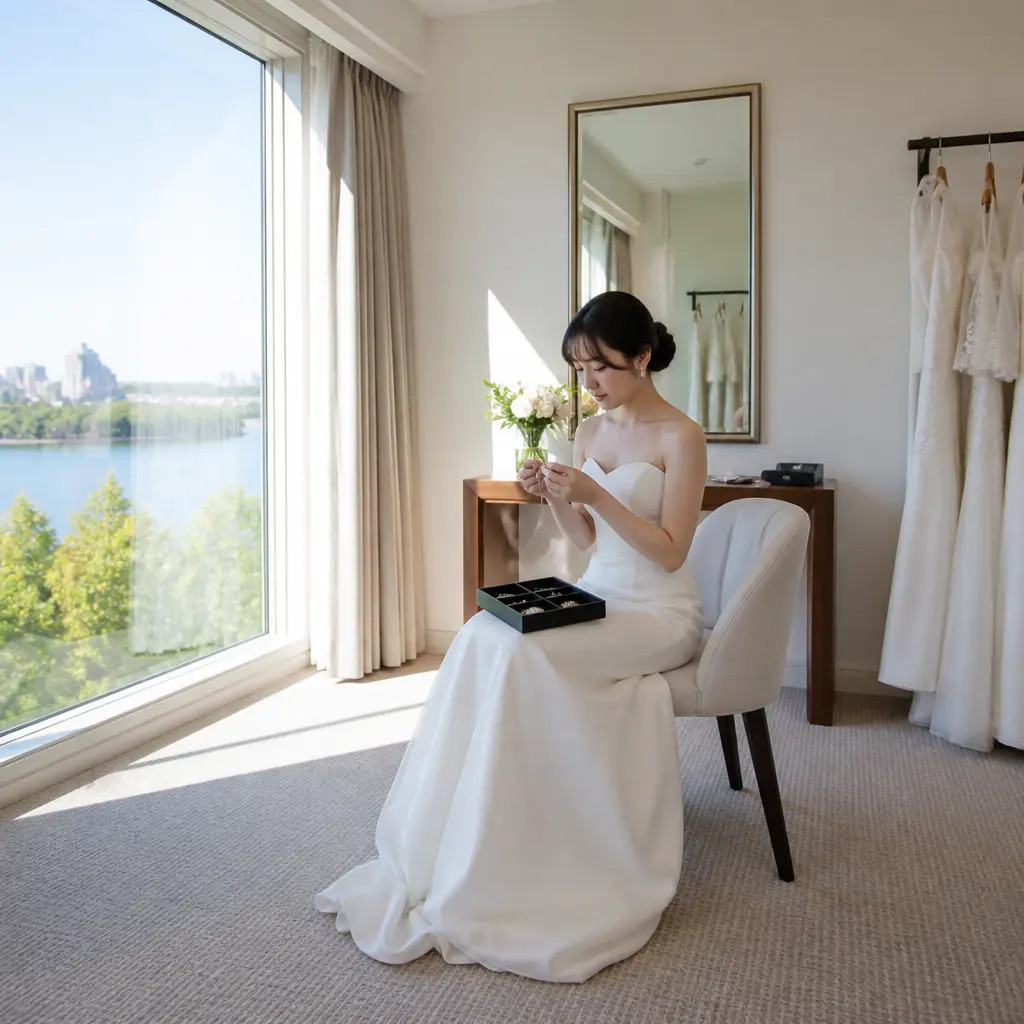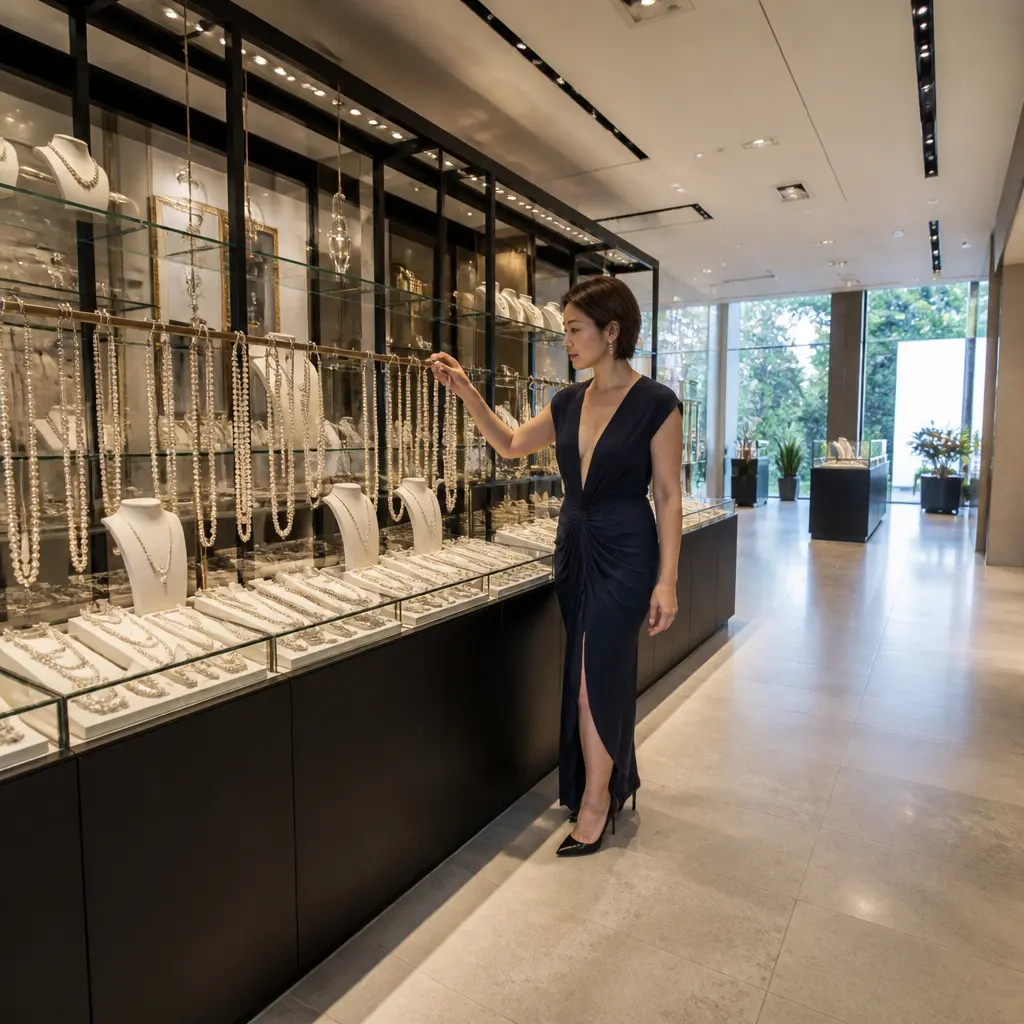

Bohemian pearl layering is the styling of pearls with delicate chains, irregular charms, mixed metals, and varied textures to create an expressive, relaxed jewelry composition. The look works because pearls soften the visual edge of vintage pendants, talismans, beads, and fine chains while layering adds depth without requiring a matching set. This guide defines the style, explains how cultured and freshwater pearls fit into it, compares chain and charm combinations, and offers practical methods for proportion, color, comfort, and care. The opportunity is also commercially relevant: Grand View Research estimated the global pearl jewelry market at approximately $12.8 billion in 2023, with continued growth projected through 2030.
Bohemian Pearl Layering Defines Expressive Mixed-Jewelry Styling
Bohemian pearl layering is a jewelry-styling method rather than a single product category. It combines pearls of different sizes, shapes, colors, or finishes with fine chains and symbolic charms. The defining attribute is intentional variation: the pieces coordinate through mood, scale, or color instead of appearing as a perfectly matched parure. The Gemological Institute of America describes pearls as organic gems formed from nacre, the layered material responsible for their characteristic luster. That natural structure explains why pearls can look polished beside gold while still fitting an earthy, handmade, or vintage-inspired wardrobe.
The main hyponyms of this style include pearl-and-chain layering, charm-centered pearl stacks, mixed-metal bohemian jewelry, asymmetrical pearl combinations, and talismanic pearl styling. Each version uses the same principle but emphasizes a different visual relationship: chains create line and movement, charms supply meaning, and pearls provide softness and light reflection.
Natural, Cultured, and Freshwater Pearls Create Different Effects
Natural pearls form without deliberate human insertion of a bead or tissue nucleus, while cultured pearls are created with human assistance and then develop through the mollusk’s nacre-producing process. Freshwater, Akoya, Tahitian, and South Sea pearls are the principal cultured categories encountered in jewelry. Freshwater pearls are especially useful for bohemian layering because they commonly appear in irregular shapes and soft pink, lavender, cream, and white tones. Akoya pearls tend to offer more uniform roundness and sharper luster, whereas Tahitian and South Sea pearls contribute darker or larger focal accents.
The Federal Trade Commission requires jewelry marketing to distinguish cultured pearls from natural pearls, making accurate product descriptions important when buying or styling a collection. A useful visual chart for an article or retail display would compare pearl type, typical size range, surface character, color family, and relative role in a layered arrangement. Such a chart helps shoppers understand why an irregular freshwater strand can complement, rather than compete with, a more formal round pearl pendant.
Irregular Shapes Support the Bohemian Attribute
Baroque pearls are non-round pearls with uneven contours. Their asymmetry makes them particularly effective in bohemian compositions, where visual personality is often more important than uniformity. A single baroque pearl pendant can act as the anchor, while smaller round pearls, rice-shaped beads, or seed pearls provide a quieter transition between chains.
Pearl size should change gradually rather than abruptly. For example, a short necklace with small pearls can sit above a medium-length chain with one baroque pendant, followed by a longer strand carrying a modest charm. This progression prevents the center of the chest from becoming visually congested and creates a readable hierarchy from near the collarbone downward.
Delicate Chains Add Rhythm to Bohemian Pearl Layering
Delicate chains are fine-link necklaces designed to add length, shine, and movement without overwhelming the central gemstone or charm. In pearl layering, they act as visual punctuation. Cable chains provide a classic line, paperclip chains introduce a contemporary geometric note, rolo chains add rounded links, and snake chains create a smooth reflective surface. Selecting two or three contrasting chain structures gives the stack dimension while keeping the overall effect light.
Chain Lengths Establish Separation and Balance
A practical necklace arrangement often uses a short layer around 14 to 16 inches, a middle layer around 18 to 20 inches, and a longer layer around 22 to 28 inches. Exact placement varies with neckline, pendant size, and body proportions, but the principle is consistent: each layer needs enough visual and physical space to remain identifiable. Extenders can improve flexibility when one necklace sits too close to another.
The same approach applies to bracelets and earrings. A slim chain bracelet may balance a pearl strand on the opposite wrist, while small pearl studs can prevent a necklace stack from competing with a large statement earring. The objective is not to repeat every material everywhere; it is to distribute visual weight across the outfit.
Mixed Metals Broaden the Bohemian Palette
Bohemian jewelry commonly combines yellow gold, silver, oxidized finishes, and occasionally rose gold. Mixed metals can make a pearl stack feel collected over time instead of purchased as a single coordinated set. To maintain cohesion, repeat one metal at least twice or connect the metals through a two-tone clasp, mixed-metal charm, or transitional chain.
Warm metals emphasize cream, peach, and golden pearls, while silver and oxidized finishes heighten the contrast of white, gray, lavender, or dark Tahitian pearls. A restrained palette is usually more effective than adding every available color. Two metals, one dominant pearl tone, and one accent color provide enough variation for most everyday combinations.
Charms Give Layered Pearls Personal and Symbolic Meaning
Charms are small decorative or symbolic pendants attached to a chain, bracelet, or pearl strand. In bohemian styling, they may represent travel, spirituality, nature, family, protection, or personal identity. Common motifs include moons, stars, lockets, medallions, shells, leaves, hands, eyes, hearts, and initials. Because pearls already communicate softness and luminosity, charms introduce narrative and make the arrangement feel individual rather than purely ornamental.
Talismanic Charms Strengthen the Storytelling Element
A talismanic charm is a pendant treated as a meaningful object, whether or not it has a formal religious or cultural function. Pairing a pearl with a moon, shell, or heart creates a connected theme of water, femininity, memory, or affection. A vintage locket beside a contemporary freshwater pearl can also express continuity between inherited and modern jewelry.
Cultural symbols require care. Motifs with religious, Indigenous, or ceremonial significance should be researched and worn respectfully rather than treated as anonymous decoration. The strongest personal stack usually includes a small number of meaningful elements instead of a dense collection of unrelated symbols.
Charm Scale Controls the Focal Point
A charm should be proportionate to the chain and pearl strand carrying it. A tiny charm works with a fine chain and small pearls, while a substantial medallion requires a stronger chain or a simpler neighboring layer. If every piece has a large pendant, the eye loses a clear focal point.
One effective formula is to combine one focal charm, one pearl-centered layer, and one plain chain. Another is to use several tiny charms on a single chain while keeping the pearl strands visually quiet. These formulas preserve movement and personality without creating excessive weight around the neckline.
Bohemian Pearl Layering Requires Proportion, Comfort, and Care
Pearls are relatively soft compared with many gemstones. The Gemological Institute of America places their typical hardness at approximately 2.5 to 4.5 on the Mohs scale, so they can scratch more easily than quartz, sapphire, or diamond. Their nacre can also be affected by perfumes, cosmetics, perspiration, and household chemicals. These characteristics make care essential when pearls are worn beside metal charms and chains.
A Layered Necklace Stack Should Be Built in Sequence
A reliable styling sequence is:
- Choose the outfit neckline and decide where the focal point should sit.
- Place the simplest short chain first to establish the upper boundary.
- Add a pearl strand or pendant at a different length.
- Introduce one charm or symbolic focal piece.
- Check whether the layers move freely without catching on one another.
- Remove one element if the arrangement looks crowded or feels heavy.
This sequence separates structure from decoration. The chains establish spacing, the pearls create the principal texture, and the charms finish the narrative. It also makes it easier to identify which piece is tangling or causing discomfort.
Pearl Care Preserves Luster in Everyday Layering
Pearls should generally be put on after perfume, hairspray, lotion, and makeup, then wiped gently with a soft damp cloth after wear. They should be stored separately from harder gemstones and rough metal edges. The American Gem Society recommends avoiding harsh cleaners and ultrasonic or steam cleaning for pearls because heat, vibration, and chemicals may damage nacre or weaken stringing materials.
Frequent wear also makes the condition of the clasp and string important. Traditional pearl strands may require periodic restringing, particularly when the silk or synthetic thread shows fraying, discoloration, or looseness. Keeping charms on separate chains can reduce abrasion against the pearl surface and make the entire collection easier to maintain.
Conclusion: Bohemian Hearts Make Pearls Feel Personal and Contemporary
Bohemian pearl layering combines the organic luster of pearls with the linear movement of delicate chains and the storytelling power of charms. Cultured and freshwater pearls provide accessible variation, baroque shapes reinforce the relaxed bohemian attribute, mixed metals add collected character, and carefully chosen talismans make the jewelry personally meaningful. Proportion, spacing, and pearl-safe care determine whether the final arrangement looks intentional rather than crowded.
For further exploration, compare pearl types through gemological references, test necklace lengths against different necklines, and build a small capsule of interchangeable chains, one focal pearl piece, and a few meaningful charms. A thoughtful stack does more than follow a trend: it turns jewelry into a flexible record of taste, memory, and identity.
Sources: Grand View Research, Pearl Jewelry Market Size, Share & Trends Analysis Report, https://www.grandviewresearch.com/industry-analysis/pearl-jewelry-market; Gemological Institute of America, Pearl Quality Factors, https://www.gia.edu/pearl-quality-factor; Gemological Institute of America, Pearl Care and Cleaning Guide, https://www.gia.edu/pearl-care-cleaning; Federal Trade Commission, Jewelry, Precious Metals, and Pewter Industries, https://www.ecfr.gov/current/title-16/chapter-I/subchapter-B/part-23; American Gem Society, Pearl Care and Cleaning, https://www.americangemsociety.org/pearl-care/