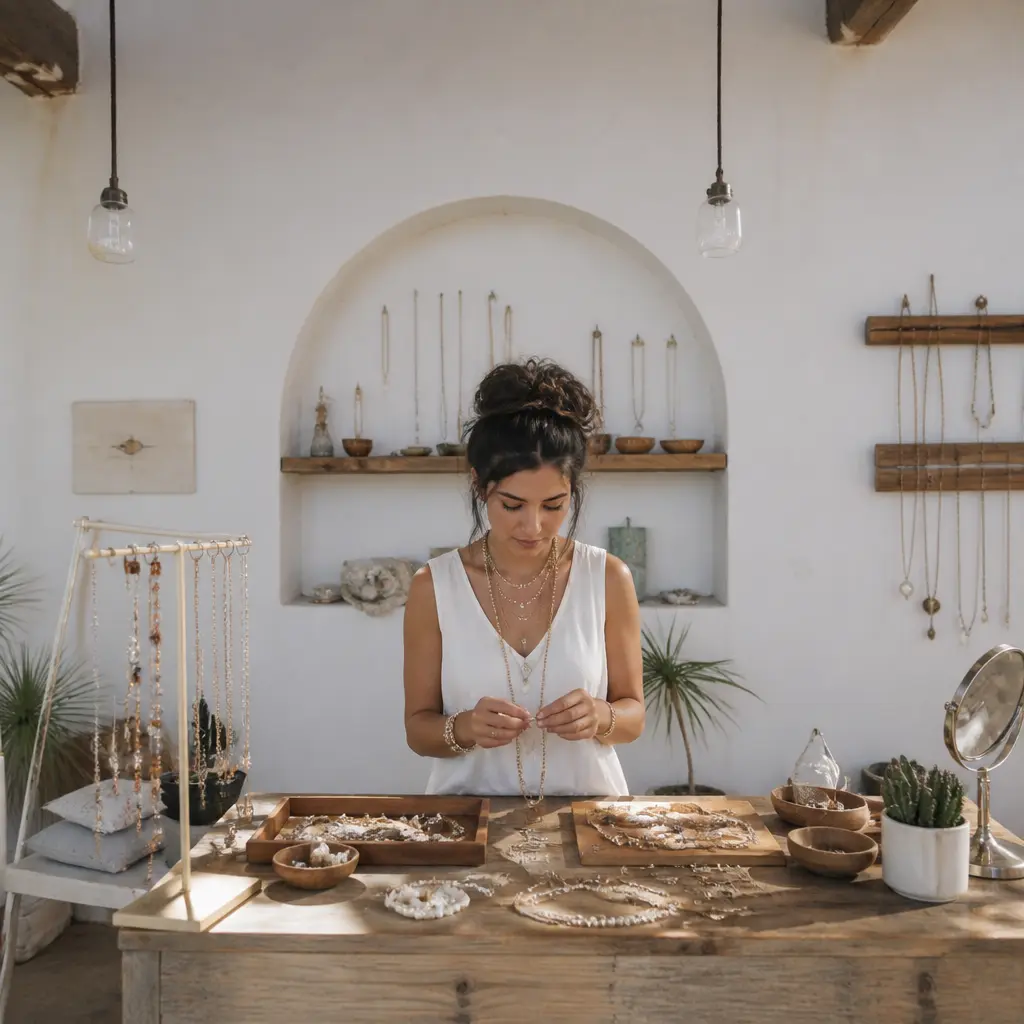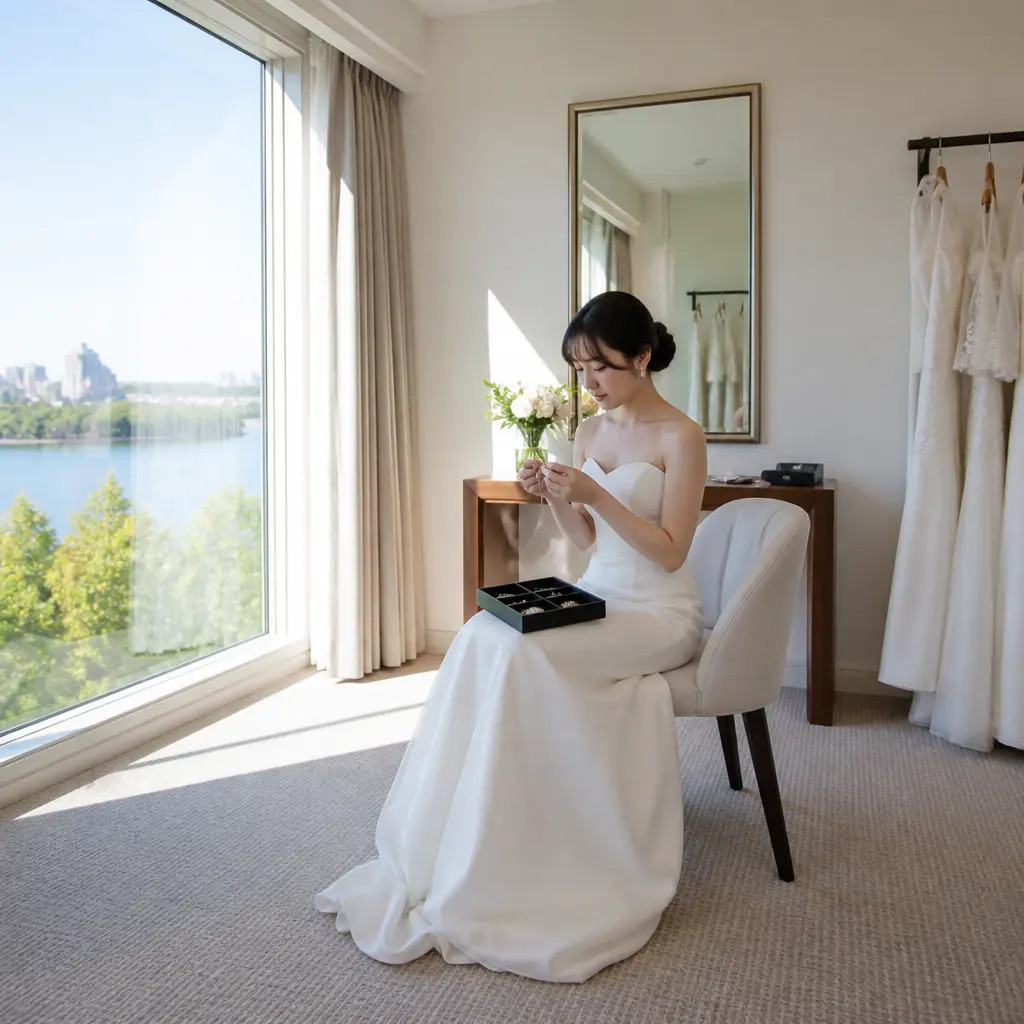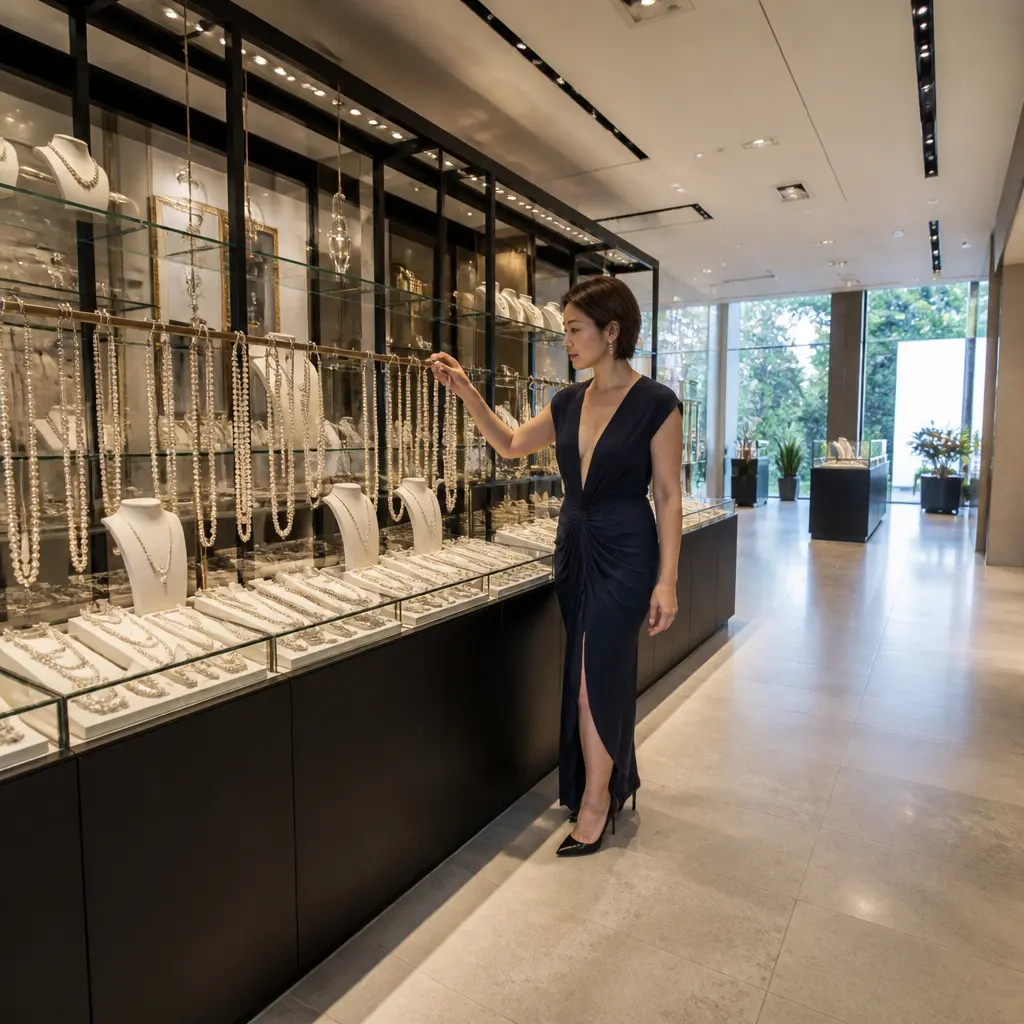
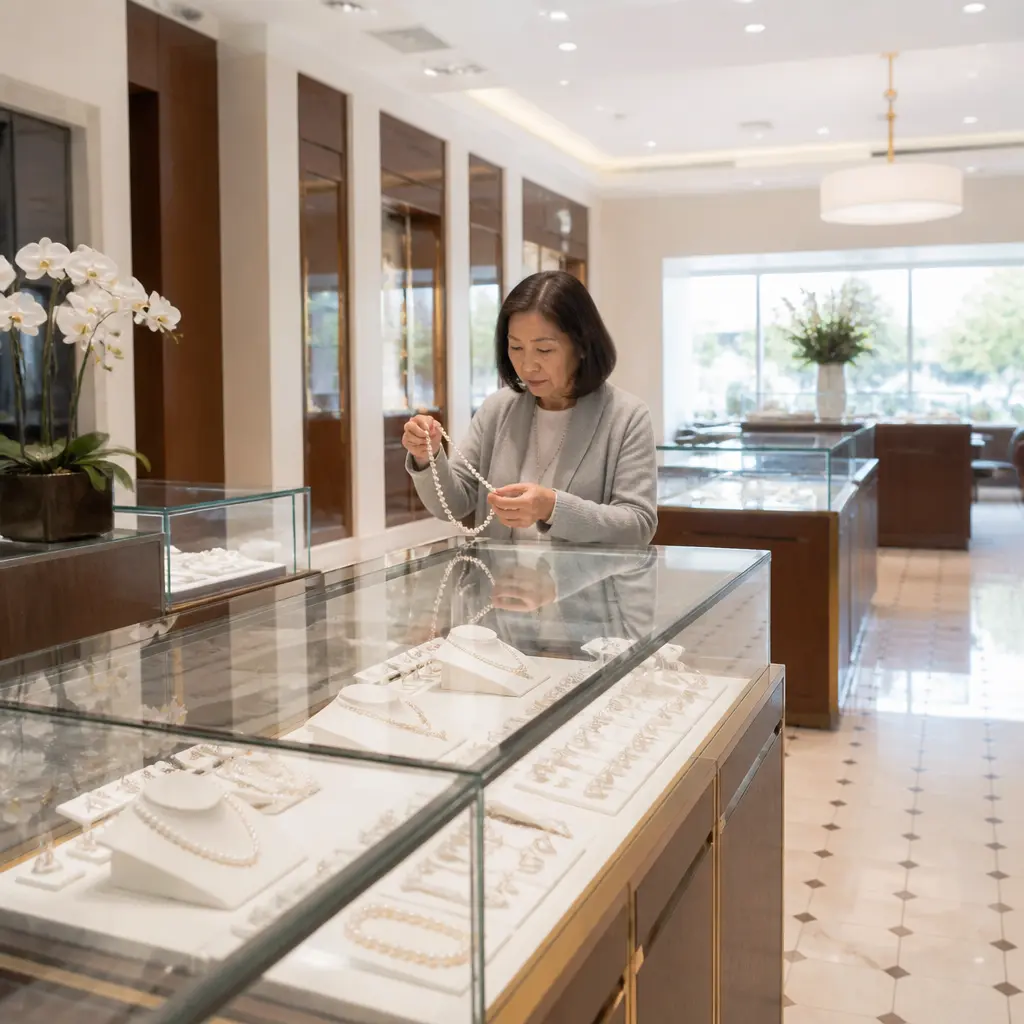
Pearl necklaces are jewelry pieces made from natural or cultured pearls threaded, linked, or set into a wearable design. Their enduring appeal lies in a combination of luminous color, restrained scale, and adaptable form: a short strand can sharpen a white shirt, a pendant can soften tailoring, and a long opera necklace can bring ceremony without looking overly formal. The Gemological Institute of America identifies pearls as organic gems formed when a mollusk deposits layers of nacre around an irritant or implanted nucleus, while the Federal Trade Commission distinguishes cultured pearls as genuine pearls created with human assistance. From classic Akoya strands to freshwater pendants, South Sea statement necklaces, and modern layered styles, pearl necklaces offer quiet grace across generations.
Pearl Necklaces Express Quiet Grace Through Proportion and Restraint
“Pearl necklace with quiet grace” is an interpretive entity-attribute pairing rather than a formal gemological classification. The entity is the pearl necklace; the attribute is a visual quality created by softness, balance, polish, and understatement. The Gemological Institute of America defines a pearl through its nacre, luster, surface, shape, color, and size. Applied to a necklace, those characteristics determine whether the finished piece feels discreet and timeless or dramatic and fashion-led.
The pairing matters because a necklace is experienced as a composition rather than as a loose collection of gems. Uniform pearls produce a formal, orderly effect; graduated pearls create a more sculptural line; irregular baroque pearls introduce movement and individuality. Luster is especially important. GIA describes luster as the quality and intensity of light reflected from a pearl’s surface, and strong luster often makes a simple strand look more refined than a larger strand with a duller surface.
Timeless Pearl Necklaces
A timeless pearl necklace is a design that remains visually useful as clothing, age, and social settings change. The most dependable examples typically use a balanced strand, a restrained pendant, or a modest station design rather than a highly seasonal silhouette. Classic white, cream, soft pink, and gray tones can work with both warm and cool wardrobes, while a moderate pearl size avoids making the necklace feel tied to one decade.
Length is one of the clearest indicators of versatility. A choker or collar sits close to the neckline and suits open collars or evening dressing. A princess-length necklace, generally around 17 to 19 inches, is among the easiest everyday proportions. Matinee and opera lengths create a longer vertical line and can be worn over knitwear, dresses, or jackets. A rope-length necklace can be doubled, knotted, or layered, giving one piece several functions.
Quiet-Luxury Pearl Necklaces
A quiet-luxury pearl necklace communicates quality without relying on conspicuous branding, excessive size, or elaborate decoration. Its visual language depends on proportion: a clean clasp, carefully matched pearls, a controlled color palette, and enough open space for the necklace to complement rather than dominate an outfit. This makes pearls particularly compatible with the broader preference for durable, repeat-wear pieces instead of disposable trend accessories.
The concept should not be confused with low cost. Cultured pearls require skilled farming, grading, harvesting, drilling, matching, and restringing. GIA notes that pearl value is assessed through several interacting factors rather than size alone, including luster, surface quality, nacre quality, shape, color, and matching. A smaller necklace with excellent luster and clean surfaces may therefore appear more elegant and command more respect than a larger but poorly matched strand.
Pearl Necklace Types Create Different Forms of Grace
Once quiet grace is understood as a combination of light, proportion, and restraint, the major pearl necklace categories become easier to distinguish. Pearl origin affects color, shape, durability, and price, while construction affects how formally the piece reads.
Akoya Pearl Necklaces
Akoya pearls are saltwater cultured pearls traditionally associated with highly round shapes and bright white or cream colors. Their often sharp luster makes them a natural choice for a classic single or double strand. An Akoya necklace can look polished with a suit, graceful with a cocktail dress, or surprisingly modern when worn with a plain T-shirt.
Freshwater Pearl Necklaces
Freshwater pearls are cultured in freshwater mussels and are available in a broad range of shapes, including round, near-round, oval, button, and baroque. Their diversity makes them useful for contemporary jewelry: irregular drops can appear artistic, while small round pearls create a softer everyday strand. Because freshwater pearls commonly offer varied shapes and colors, they are also well suited to mixed pearl necklaces and layered designs.
Tahitian and South Sea Pearl Necklaces
Tahitian pearls are known for naturally dark body colors that may show green, blue, silver, or peacock overtones. South Sea pearls are generally associated with larger sizes and white, silver, cream, or golden colors. These necklaces create a stronger focal point than a delicate Akoya strand, but they can still express quiet grace when the design uses a single pendant, a restrained graduated arrangement, or widely spaced pearls.
Pendant, Station, and Baroque Pearl Necklaces
A pearl pendant places one pearl or a small cluster at the center of a chain, making it an accessible entry point for someone who does not want a traditional strand. Station necklaces distribute pearls along a chain, creating visual pauses and a lighter appearance. Baroque pearl necklaces use non-round forms, so each pearl contributes an individual contour. These hyponyms expand the category beyond the formal matched strand and make pearls relevant to minimalist, artistic, and casual wardrobes.
Pearl Necklaces Connect History, Craft, and Personal Style
Pearls have long carried associations with ceremony, status, and refinement, but modern cultured-pearl production made their aesthetic available to a much wider audience. The National Museum of Natural History and the Gemological Institute of America describe the development of cultured pearls as a major transformation in the jewelry industry. Kokichi Mikimoto’s work in Japan helped establish commercial pearl cultivation in the late nineteenth and early twentieth centuries, changing pearls from rare natural treasures into a dependable jewelry category.
That history explains why pearl necklaces can feel both traditional and democratic. They may recall heirloom jewelry, diplomatic dressing, or mid-century elegance, yet contemporary makers now combine pearls with leather, recycled metals, colored gemstones, sculptural clasps, and asymmetrical forms. A chart comparing necklace length, pearl origin, color, and form would show that “classic” and “modern” are not opposites: the same pearl type can move between them through proportion and setting.
Choosing a Pearl Necklace for Any Age
Age is less important than scale, comfort, wardrobe, and personal contrast. Someone seeking a first necklace may prefer a 16- to 18-inch strand of small or medium pearls. Someone building a collection may add a baroque pendant, a long rope, or a dark Tahitian strand. Mature style does not require increasingly elaborate jewelry; it often benefits from better luster, a comfortable clasp, and a length that sits naturally with the wearer’s neckline.
Color should also be selected deliberately. White and cream pearls offer the most traditional effect, pink and peach tones can introduce warmth, and gray or dark pearls provide contrast against pale clothing. Skin tone, hair color, metal preference, and the colors most often worn are practical guides, but there is no universal “correct” pearl color. The best necklace is the one that earns frequent wear.
Caring for Pearl Necklaces
Pearls are comparatively soft organic gems. GIA places their hardness at approximately 2.5 to 4.5 on the Mohs scale, which means they can scratch more easily than many gemstones. Wearers should put pearls on after perfume, cosmetics, hairspray, and lotions have dried; wipe them gently with a soft cloth after use; store them separately from harder jewelry; and avoid prolonged exposure to heat, solvents, and household chemicals.
Traditional knotted strands also benefit from inspection and periodic restringing, particularly when worn often. Knots help prevent every pearl from scattering if the thread breaks and reduce friction between adjacent pearls. A professional jeweler can assess worn silk, loose clasps, drilled-hole damage, and discoloration before a small maintenance issue becomes a loss.
Why Timeless Pearl Necklaces Still Matter
Timeless pearl necklaces succeed because they unite material history with flexible design. Their quiet grace comes from measurable qualities—luster, surface, shape, color, matching, scale, and construction—rather than from age alone. Akoya strands offer disciplined polish, freshwater pearls provide variety, Tahitian and South Sea pearls bring presence, and pendants or baroque forms make the category accessible to modern wardrobes.
For a thoughtful purchase, compare pearl type, luster, surface quality, length, clasp security, care requirements, and the credibility of the seller. Consider starting with a versatile princess-length necklace, then adding a pendant or longer strand as your style develops. Further reading from the Gemological Institute of America and the Federal Trade Commission can help shoppers understand pearl terminology, cultured-versus-natural disclosure, and long-term care.
Sources: Gemological Institute of America, “Pearl Quality Factors,” https://4cs.gia.edu/en-us/quality-factor/pearl/; Gemological Institute of America, “Pearl Care and Cleaning Guide,” https://www.gia.edu/pearl-care-cleaning; Federal Trade Commission, “Jewelry Guides,” https://www.ecfr.gov/current/title-16/chapter-I/subchapter-B/part-23; Smithsonian National Museum of Natural History, “Pearls,” https://naturalhistory.si.edu/education/teaching-resources/earth-science-and-geology/pearls; Gemological Institute of America, “The History of Cultured Pearls,” https://www.gia.edu/pearl-history-lore; Federal Trade Commission, “Buying Jewelry,” https://consumer.ftc.gov/articles/buying-jewelry