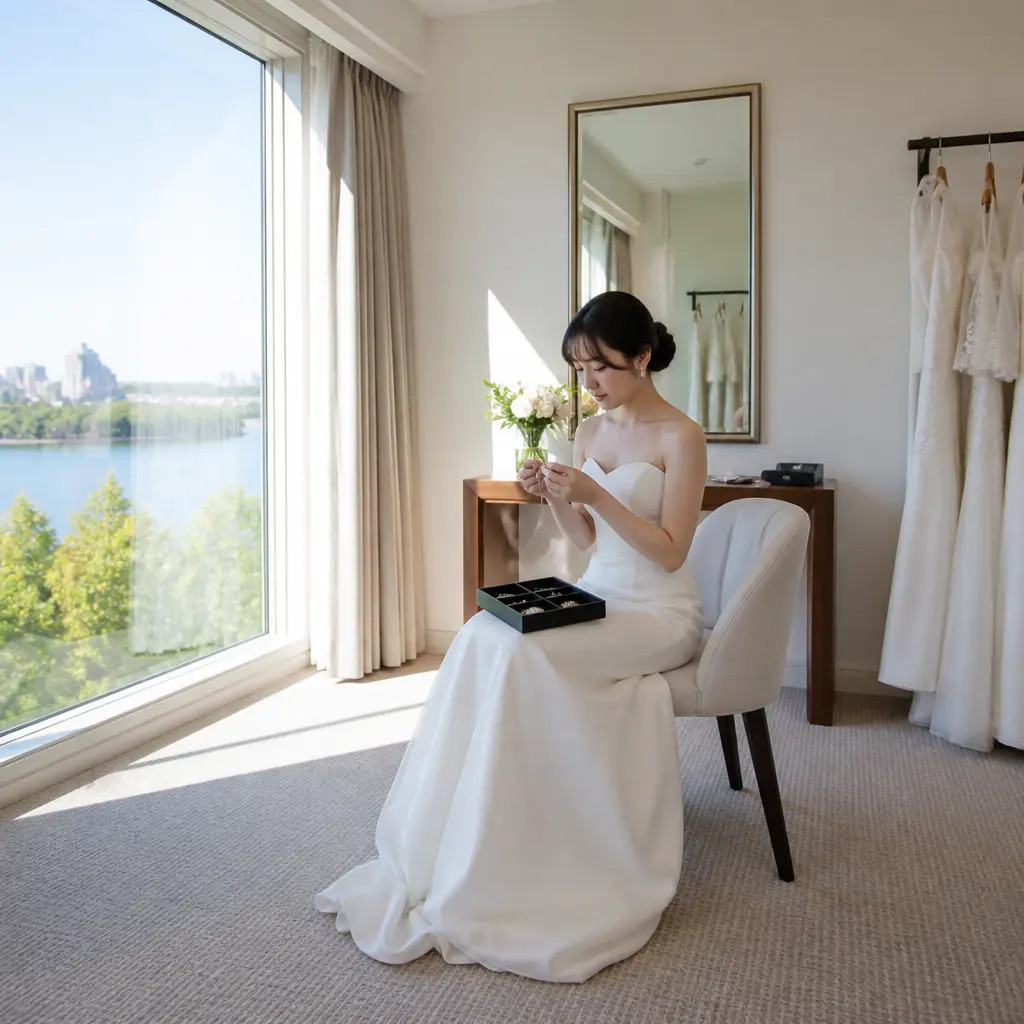
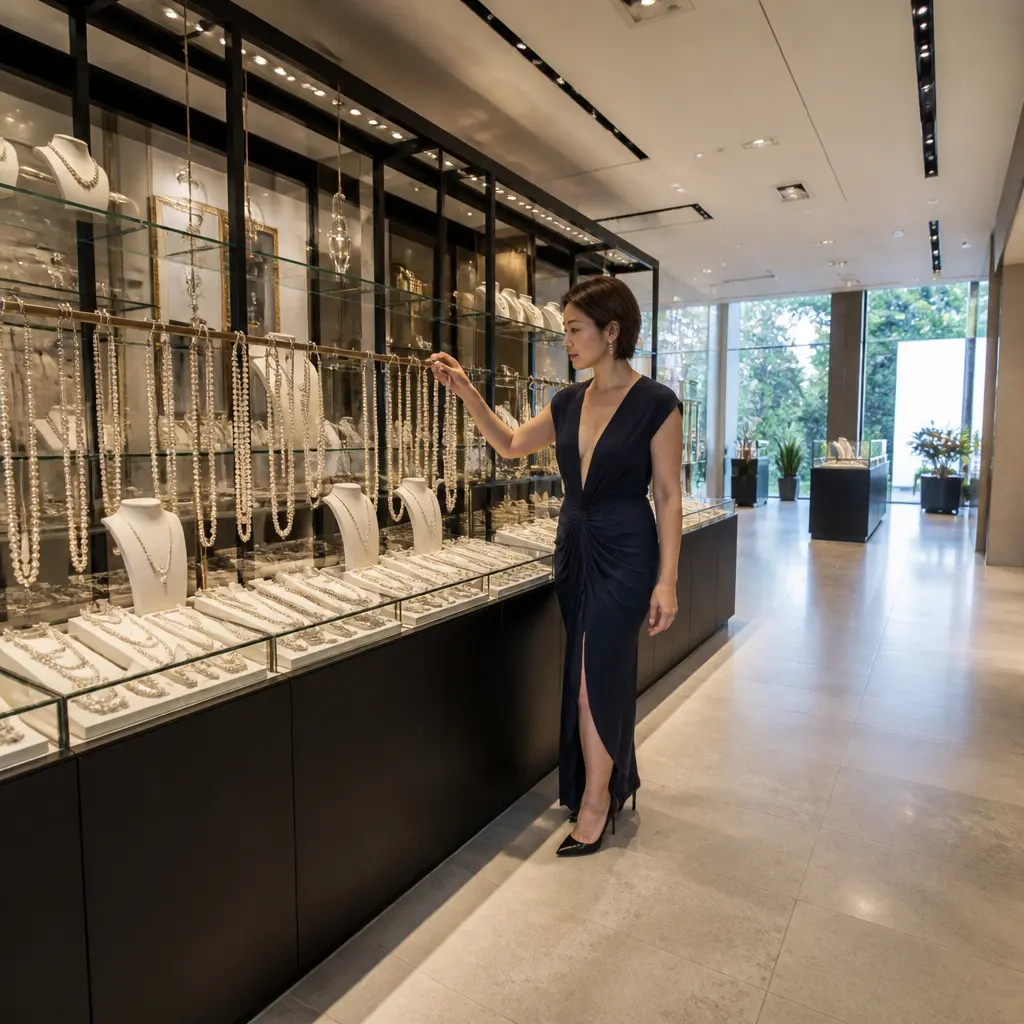
Long pearl necklaces are extended strands or chains of pearls designed to fall below the collarbone, often reaching the bust, waist, or lower torso. Their uninterrupted vertical line is especially effective with plunging necklines because it follows the opening of the garment without competing with it. Opera-length strands generally measure about 28–34 inches, while rope-length necklaces exceed 45 inches, according to widely used jewelry-length conventions. This guide explains how long pearl necklaces add grace, how their lengths and silhouettes work with different plunging necklines, how to choose pearl quality and color, and how to wear and care for these relatively delicate organic gems.
Style Plunging Necklines with Long Pearl Necklaces
A long pearl necklace is best defined by both its length and its visual function: it creates a vertical focal line that elongates the upper body while softening the sharp geometry of a deep V, sweetheart, or keyhole neckline. The Gemological Institute of America describes pearls as organic gems produced by mollusks, distinguishing them from minerals such as diamonds, sapphires, and rubies. That organic origin gives pearls their characteristic luster and also explains why they require gentler care.
For a plunging neckline, the necklace should usually echo the garment’s center line rather than sit across the throat. A 28–34-inch opera strand can end near the bust or upper abdomen, whereas a rope-length strand of more than 45 inches can be doubled, knotted, or allowed to fall in a long uninterrupted line. These proportions make the necklace both an accessory and a framing device.
Opera-Length Pearls for Controlled Elegance
An opera-length pearl necklace is typically 28–34 inches long. It is the most adaptable choice for a plunging neckline because it offers visible length without necessarily reaching the waist. Worn as a single strand, it creates a refined vertical accent; doubled around the neck, it becomes a shorter layered arrangement with additional volume.
Opera-length pearls work particularly well with evening gowns, wrap dresses, and deep V-neck blouses. If the neckline is narrow and sharply angled, a single strand preserves its clean shape. If the neckline is broad or softly draped, doubling the necklace can provide balance without making the look appear unfinished.
Rope-Length Pearls for Dramatic Vertical Lines
A rope-length pearl necklace is generally longer than 45 inches. Its extended scale makes it a strong choice for formal plunging dresses, minimalist gowns, and low-cut tailoring. The strand may be worn loose, doubled, tripled, or tied in a low knot, giving one necklace several silhouettes.
The visual advantage of a rope is continuity. Rather than stopping at the collarbone, it carries the eye downward and can make a plunging neckline feel intentional and graceful. Because a rope strand can move considerably while worn, a secure clasp and evenly matched pearls are important for both appearance and safety.
Sautoir and Lariat Variations
A sautoir is a long, flexible necklace often finished with a pendant, tassel, or decorative drop. A lariat is an open-ended necklace that is wrapped or threaded through itself rather than closed with a conventional clasp. Pearl sautoirs and lariats are useful with plunging necklines because they can be adjusted to end exactly where the neckline or bodice begins to narrow.
These variations are especially effective when the dress has a simple surface. A pearl drop can occupy the open space created by a deep neckline, while a tassel or baroque pearl introduces movement. With heavily embellished clothing, however, a simpler strand is usually more graceful than a highly decorated pendant.
Choose Pearl Shape, Color, and Scale for the Neckline
Once the length is selected, the pearl’s shape, color, and size determine whether the necklace appears understated or theatrical. The Federal Trade Commission distinguishes cultured pearls from natural pearls by the role of human intervention in their formation. In practical shopping terms, a properly described cultured pearl can offer the appearance and luster associated with fine pearl jewelry at a broader range of prices than a rare natural pearl.
Round Pearls for Classic Grace
Round pearls create the most traditional impression because their symmetrical shape produces an even rhythm along the strand. They suit satin, silk, velvet, and other formal fabrics, particularly when the plunging neckline is part of an evening gown or bridal look.
A uniform strand is usually the safest choice when the clothing includes strong tailoring or architectural construction. Its regular spacing supports the clean lines of the garment, while a soft white or ivory surface adds luminosity without introducing a competing color.
Baroque Pearls for Organic Contrast
Baroque pearls are irregularly shaped pearls whose asymmetry gives a necklace a more contemporary and artistic character. Their uneven contours contrast attractively with a sharply cut V-neck, making them suitable for modern dresses, fluid slip silhouettes, and understated separates.
Because baroque pearls vary naturally, the strand may appear less formal than a round pearl rope. That difference can be useful: a baroque necklace prevents a plunging neckline from looking overly polished or predictable while preserving the reflective quality associated with pearls.
White, Cream, and Darker Pearls
White and cream pearls brighten a dark dress and create a high-contrast focal line. Silver, gray, or peacock-toned pearls can appear more understated against black, navy, charcoal, or jewel-toned clothing. Gold-toned pearls complement warm fabrics such as champagne satin, bronze silk, and rust-colored velvet.
Color should also relate to the wearer’s skin tone and the dress fabric. A cool white pearl may look crisp against blue or emerald, while cream or golden overtones can harmonize with warm neutrals. When uncertain, softly lustrous white or cream cultured pearls remain the most versatile choices.
Match Long Pearl Necklaces to Plunging Neckline Shapes
The most graceful combinations repeat or complement the neckline’s direction, depth, and width. A necklace that ends directly at the lowest point of a plunging neckline can emphasize that point, while one that finishes several inches above or below it often creates a more deliberate composition.
Deep V-Necklines
A deep V-neckline naturally welcomes a long single strand because both the garment and the necklace form a downward line. An opera-length necklace can terminate near the base of the V, while a rope-length necklace can extend beyond the bodice for greater drama.
Avoid excessive layering at the throat when the V is narrow. The open space should remain visible; otherwise, multiple short strands can make the neckline appear crowded and reduce the elongating effect.
Sweetheart and Plunging Strapless Necklines
A plunging sweetheart neckline has curved edges and a central dip. A long pearl necklace provides a contrasting vertical element, which helps balance the rounded shape. A single opera strand is usually more elegant than several short necklaces because it leaves the décolletage open while directing attention toward the center.
For a strapless gown, consider the visual weight of the bodice. A heavily beaded or embroidered dress may call for a slender strand, while a plain fabric can support larger pearls, a double wrap, or a pendant-ended sautoir.
Plunging Halter and Keyhole Necklines
Halter necklines already draw attention toward the neck and shoulders, so a long necklace should be streamlined. A rope worn as one strand or a lariat with a modest drop can extend the line without competing with the halter straps.
For a keyhole neckline, place the lowest section of the necklace either inside the opening or clearly below it. Matching the necklace’s endpoint to the keyhole can look intentional, but a near miss can appear accidental. A measured fit or adjustable lariat is particularly helpful for this neckline.
Balance Pearl Size, Outfit Detail, and Proportion
Pearl size changes the visual weight of a long necklace. Smaller pearls create a delicate, fluid line, while larger pearls produce a stronger focal point. The ideal scale depends on the wearer’s proportions, the depth of the neckline, and the amount of detail in the clothing.
Fine Pearls with Embellished Dresses
A slender opera strand works well with sequins, lace, beading, or metallic embroidery because it contributes luster without adding a second elaborate pattern. The necklace should support the dress rather than compete with its surface decoration.
Larger Pearls with Minimalist Clothing
Larger pearls can anchor a plain silk dress, a monochrome jumpsuit, or a simple low-cut blouse. Their rounded forms soften minimalist tailoring and make the necklace a deliberate centerpiece. A large pearl strand should generally be worn alone unless the additional jewelry is exceptionally restrained.
Layering and Knotted Styling
Layering means wearing multiple lengths or wrapping one long necklace several times. Knotting a rope-length strand creates a low focal point and reduces movement. These techniques are useful when the plunging neckline is very deep, but the knot should sit securely and should not pull the strand against sharp hardware or rough fabric.
Protect Pearl Quality While Wearing a Long Strand
Pearls are beautiful but comparatively soft. The Gemological Institute of America places pearl hardness at approximately 2.5–4.5 on the Mohs scale, meaning pearls can scratch more easily than quartz, sapphire, or diamond. Long strands also experience more movement and contact with clothing, so care is essential.
Wear Pearls Last and Remove Them First
Put on a pearl necklace after applying perfume, hairspray, cosmetics, and skincare products, and remove it before changing clothes or cleansing the skin. The GIA recommends this approach because chemicals, alcohol, oils, and acids may dull the nacre, the layered material that gives pearls their surface luster.
Store Long Necklaces Flat and Separately
Store a long pearl necklace flat in a soft pouch or lined compartment rather than allowing it to tangle with harder jewelry. Do not place pearls in airtight plastic for long-term storage; they benefit from moderate environmental moisture, while excessive dryness can contribute to deterioration of the silk or other stringing material.
Inspect the Clasp and Stringing
Before wearing a rope or opera-length necklace with a plunging dress, inspect the clasp, knots, and areas around the end pearls. Traditional pearl strands are often individually knotted, which helps prevent every pearl from falling if the strand breaks and keeps pearls from rubbing directly against one another. A jeweler should restring a frequently worn or visibly weakened necklace.
Use Long Pearl Necklaces for Formal and Contemporary Looks
The long pearl necklace has historical associations with evening dress, bridal styling, and the sautoir tradition, yet its proportions also suit contemporary fashion. Designers and stylists frequently use extended strands to bring softness to tuxedo-inspired tailoring, low-cut knitwear, slip dresses, and minimalist gowns.
A practical styling test is to stand in the complete outfit and observe three points: where the necklace begins, where it crosses the deepest part of the neckline, and where it ends. If all three points form a clean vertical rhythm, the necklace is likely supporting the garment. If the strand tangles with straps, ends at an awkward seam, or competes with a pendant already on the dress, a different length or simpler pearl shape will usually work better.
Long pearl necklaces add grace to plunging necklines by combining vertical proportion, reflective light, and tactile softness. Opera strands offer controlled elegance, rope-length necklaces create drama, and sautoir or lariat designs provide adjustable movement. Round pearls reinforce classic formality, baroque pearls introduce modern contrast, and carefully selected colors can brighten or deepen the entire look. Because pearls measure only about 2.5–4.5 on the Mohs scale, thoughtful storage and cosmetic protection are as important as choosing the right length. For further refinement, compare the necklace against the actual neckline, fabric, and level of embellishment before wearing it for an event.
Sources: Gemological Institute of America, “Pearl Quality Factors,” https://www.gia.edu/pearl-quality-factor; Gemological Institute of America, “Pearl Care and Cleaning,” https://www.gia.edu/pearl-care-cleaning; Gemological Institute of America, “Pearls,” https://www.gia.edu/pearl; Federal Trade Commission, “Jewelry, Precious Metals, and Pewter Industries,” https://www.ecfr.gov/current/title-16/chapter-I/subchapter-B/part-23; American Gem Society, “Pearl Buying Guide,” https://www.americangemsociety.org/pearl-buying-guide/.