Pearl necklace lengths are the measured strand dimensions used to classify styles such as collar, choker, princess, matinee, opera, and rope. For face-shape styling, shorter lengths generally emphasize the jaw and neckline, while longer lengths create vertical lines that can visually elongate the face. The most versatile choice is usually a 17–19-inch princess strand, while oval faces can wear nearly any length; round faces often benefit from longer strands, and oblong faces may look balanced in chokers or shorter princess necklaces. Because face-shape matching is an aesthetic guideline rather than a clinical formula, neck size, hairstyle, clothing neckline, pearl size, and personal preference should also influence the final choice.
Complementing Pearl Necklace Lengths for Face Shapes
Pearl necklace length is the distance around the strand when laid flat or the approximate finished circumference when worn. The Gemological Institute of America describes pearls through measurable characteristics including size, shape, color, luster, surface quality, nacre, and matching; length is a separate design and fit attribute that determines where the necklace rests on the body. In traditional jewelry terminology, common length hyponyms include collar, choker, princess, matinee, opera, and rope.
The main styling principle is proportion. A necklace that sits close to the neck draws attention horizontally toward the jawline, whereas a longer strand creates a downward visual path. This explains why round faces are often paired with princess, matinee, or opera lengths, while oblong faces can be complemented by collars, chokers, or shorter princess strands. These recommendations do not change the wearer’s actual facial dimensions; they simply influence visual balance.
Pearl Necklace Length Categories
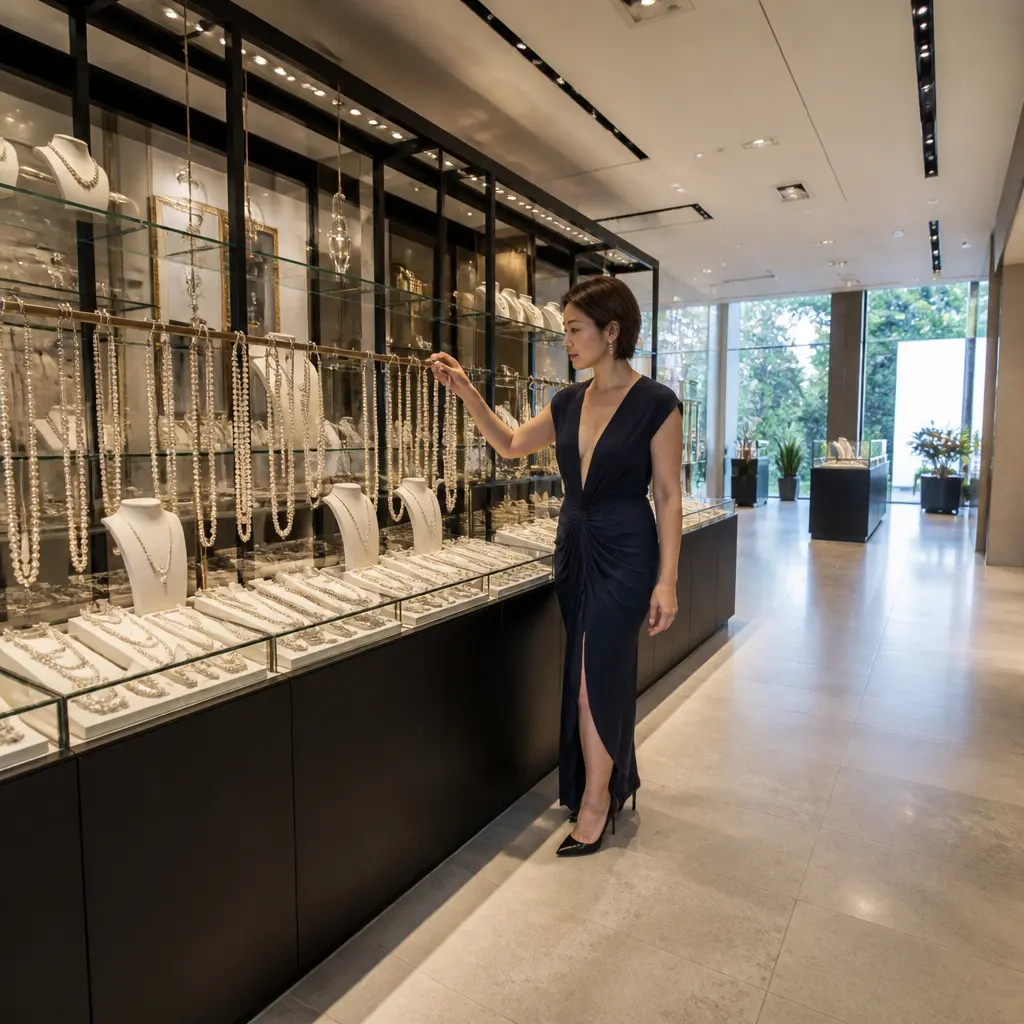
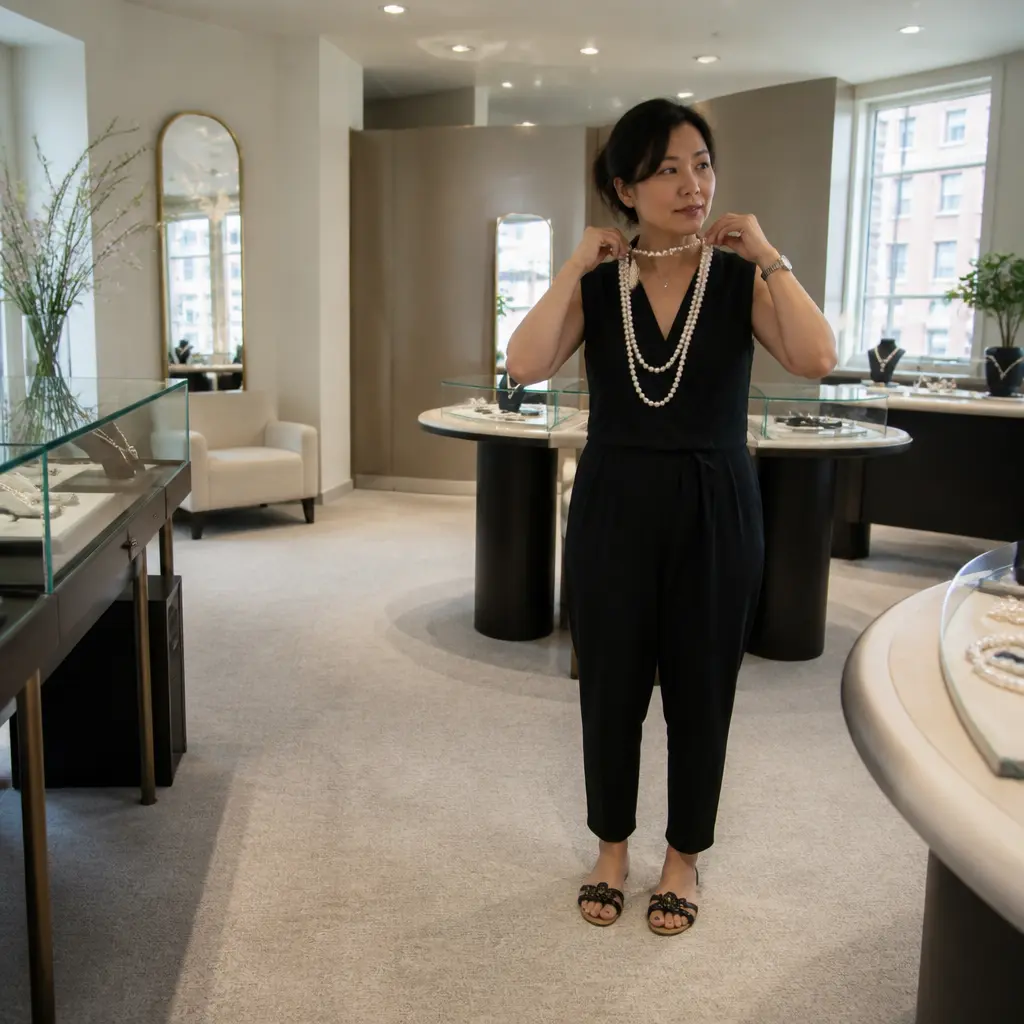
A collar is typically about 12–14 inches and sits tightly around the neck. A choker is commonly about 14–16 inches, although retailers may define the boundary differently. A princess necklace is generally 17–19 inches and falls near the collarbone. A matinee strand is approximately 20–24 inches, an opera strand about 28–34 inches, and a rope is usually 45 inches or longer. These ranges are conventions rather than universal technical standards, so a seller’s measurement chart should be checked before purchase.
Pearl diameter changes the apparent proportion of each length. The GIA notes that cultured pearls commonly occur across a broad size range, approximately 2–16 millimeters depending on the pearl type. A 16-inch strand of small pearls can look delicate and understated, while the same length made with larger pearls can appear bolder and visually heavier. This is why necklace length should be assessed together with pearl size and strand thickness.
Face-Shape Matching as Visual Proportion
Face shape is an informal styling category based on the relative width, length, jawline, cheekbones, and forehead. Common hyponyms include oval, round, square, oblong or rectangular, heart-shaped, and diamond-shaped faces. Most people have blended characteristics rather than one perfectly defined category, and hairstyle or camera angle can change how a face appears.
The American Academy of Dermatology emphasizes that facial appearance is influenced by multiple structural and surface features, including inherited anatomy and age-related changes. For jewelry selection, however, exact anatomical measurement is unnecessary. A practical approach is to identify the dominant visual impression, then choose a necklace length that either repeats or contrasts with that impression.
Balancing Oval and Round Face Shapes with Pearl Lengths
Oval Faces and Versatile Pearl Necklace Lengths
An oval face is usually longer than it is wide, with a gently rounded jaw and forehead that is often somewhat wider than the chin. Because its proportions are relatively balanced, oval faces can accommodate collars, chokers, princess strands, matinee necklaces, opera styles, and ropes.
A 17–19-inch princess necklace is a dependable everyday option because it rests near the collarbone without creating an excessive horizontal or vertical emphasis. A long opera or rope strand can add elegance to a simple dress, while a short collar can frame the neck for formal evening wear. The relevant design choice is less about correcting the face and more about matching the necklace to the outfit’s neckline and the wearer’s desired level of emphasis.
Round Faces and Lengthening Pearl Lines
A round face generally has similar width and length, with softer cheeks and a curved jawline. Longer necklaces are often recommended because the downward line from the neck can create an impression of added length. Princess, matinee, opera, and rope strands are therefore useful starting points.
A 20–24-inch matinee strand is particularly adaptable: it extends below the collarbone but remains practical for daytime clothing. An opera-length strand can produce a stronger vertical effect over a high-neck blouse or plain dress. Very tight collars and chokers may emphasize the width of the face, although they can still work when the wearer intentionally wants a bold, compact look or pairs the necklace with a long pendant.
Balancing Oblong, Square, Heart, and Diamond Face Shapes
Oblong Faces and Shorter Pearl Necklace Lengths
An oblong or rectangular face is noticeably longer than it is wide and may have a straighter cheek line or a more elongated chin. Collars, chokers, and shorter princess necklaces can introduce a horizontal visual break and help balance the face’s length.
A 14–16-inch choker can work well with open necklines, while a 17–19-inch princess strand offers a softer and less restrictive alternative. Very long ropes may reinforce vertical emphasis, but they are not automatically unsuitable. Layering a rope with a shorter strand can add horizontal detail and create a more complex proportion.
Square Faces and Curved Pearl Silhouettes
A square face often has a broad forehead, pronounced cheekbones, and a more angular jaw. The objective is commonly to soften the strong horizontal and angular impression. Chokers with rounded pearl forms, princess strands, and medium-length matinee necklaces can create a gentler frame.
A 17–19-inch princess necklace is a useful default because it places the rounded strand below the jaw rather than directly across it. A 20–24-inch matinee necklace can add graceful length without overwhelming the wearer. Pearls with high luster and smooth round or near-round shapes can reinforce the soft, fluid quality of the styling, although baroque pearls can provide an intentionally modern contrast.
Heart-Shaped Faces and Lower-Set Necklace Lengths
A heart-shaped face is typically wider at the forehead and cheekbones and narrower toward the chin. Medium-length necklaces can draw attention toward the lower face and create balance between the wider upper region and tapered jaw.
Princess and matinee lengths are generally practical choices. A 17–19-inch strand works with many necklines, while a 20–24-inch necklace can create a longer, lower focal point. Very wide collars may emphasize the upper face, so they are best selected when that dramatic effect is intentional or when the necklace is balanced by a substantial pendant.
Diamond Faces and Flexible Pearl Proportions
A diamond-shaped face is often characterized by prominent cheekbones, a narrower forehead, and a narrower chin. Because the widest point is near the center of the face, both shorter and medium-length pearl necklaces can work, depending on whether the wearer wants to emphasize the neck, soften the cheek area, or extend the overall silhouette.
Chokers can frame the neck and create a polished formal effect, while princess or matinee lengths shift attention downward. Rounded pearl shapes and curved strands can soften angular cheekbones; geometric clasps or irregular baroque pearls can instead highlight a contemporary, architectural style.
Choosing Pearl Necklace Length by Fit, Clothing, and Occasion
Neck Measurement and Wearer Comfort
Face-shape advice is only useful when the necklace fits comfortably. To estimate a choker length, measure around the neck with a flexible tape and add roughly 1–2 inches for ease, depending on the desired fit. For a princess or longer necklace, measure from the base of the neck to the intended resting point, then account for the clasp and pearl diameter.
Pearl jewelry is relatively delicate. The GIA rates pearl hardness at approximately 2.5–4.5 on the Mohs scale, making pearls softer than many common gemstones. The organization recommends protecting pearls from cosmetics, perfume, hairspray, abrasion, and prolonged exposure to heat or chemicals. A correctly fitted length reduces tugging and contact with clothing, which can help preserve the strand.
Neckline and Occasion Coordination
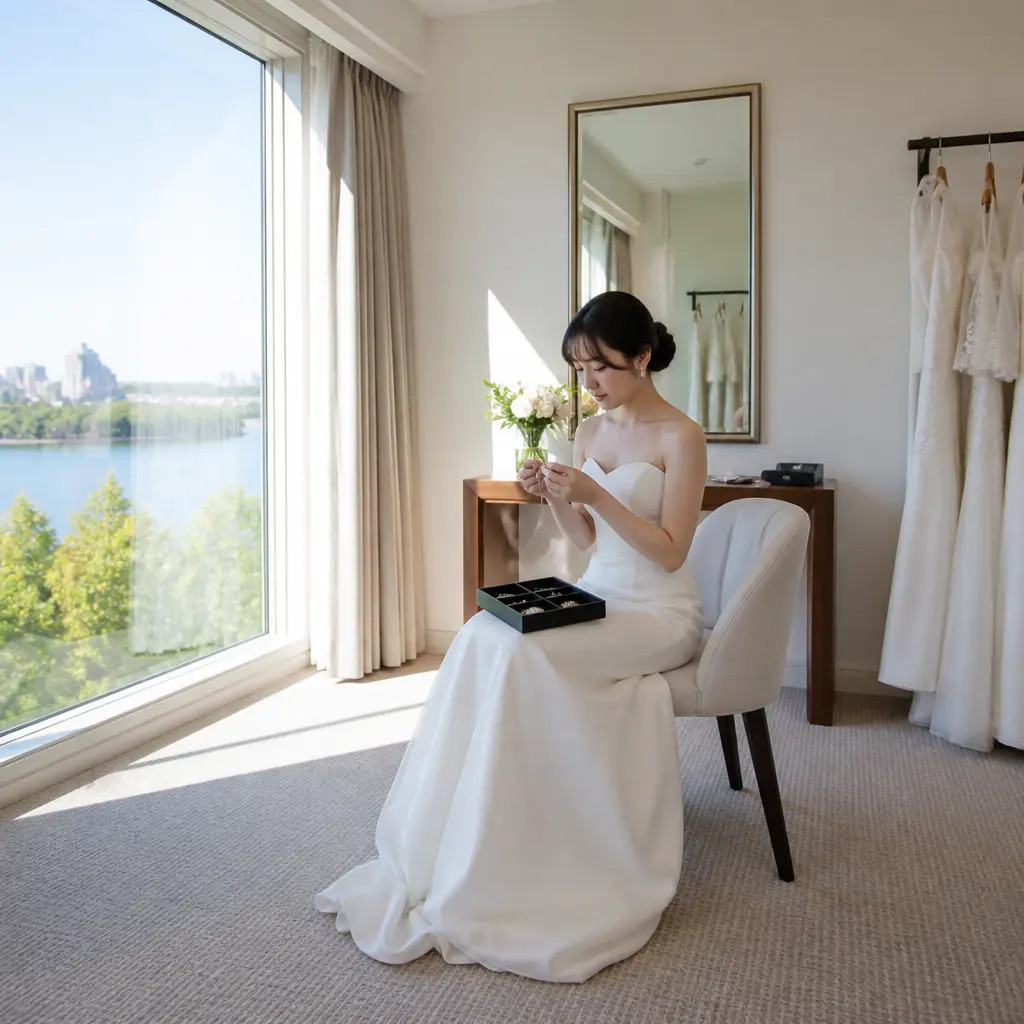
A princess strand usually complements crew necks, scoop necks, boat necks, and many business outfits. Matinee lengths work well with open collars, tailored jackets, and simple dresses. Opera and rope lengths suit eveningwear, high necklines, and layering, while collars and chokers are effective with strapless or broad open necklines.
The Federal Trade Commission requires jewelry marketing to describe cultured and imitation pearls accurately, which makes product terminology important when comparing strands. Buyers should confirm whether a necklace contains natural pearls, cultured pearls, imitation materials, freshwater pearls, Akoya pearls, South Sea pearls, or Tahitian pearls. These distinctions affect value, appearance, durability expectations, and the visual weight of the finished necklace.
Conclusion: Selecting the Best Pearl Necklace Length for Each Face Shape
Pearl necklace lengths provide a practical styling vocabulary: collars and chokers create close horizontal framing, princess strands offer balanced everyday proportion, matinee lengths introduce moderate vertical movement, and opera or rope necklaces create the strongest elongated line. Oval faces are adaptable, round faces often benefit from longer lengths, oblong faces can be balanced by shorter strands, and square, heart, and diamond shapes can be styled through a combination of length, pearl shape, and neckline.
These face-shape recommendations are visual guidelines, not fixed rules. Before buying, measure the neck, review the retailer’s actual length range, consider pearl diameter, match the necklace to clothing, and verify whether the pearls are cultured or imitation. Further reading from the Gemological Institute of America and the Federal Trade Commission can help buyers evaluate pearl quality, care, and accurate product descriptions.
Sources: Gemological Institute of America, Pearl Quality Factors, https://www.gia.edu/pearl-quality-factor; Gemological Institute of America, Pearl Care and Cleaning, https://www.gia.edu/pearl-care-cleaning; Federal Trade Commission, Jewelry, Precious Metals, and Pewter Industries, https://www.ftc.gov/legal-library/browse/rules/jewelry-precious-metals-pewter-industries; American Academy of Dermatology Association, Skin Aging: What Happens to Your Skin, https://www.aad.org/public/everyday-care/skin-care-secrets/anti-aging/skin-aging; Mikimoto, Pearl Necklace Length Guide, https://www.mikimotoamerica.com/us_en/