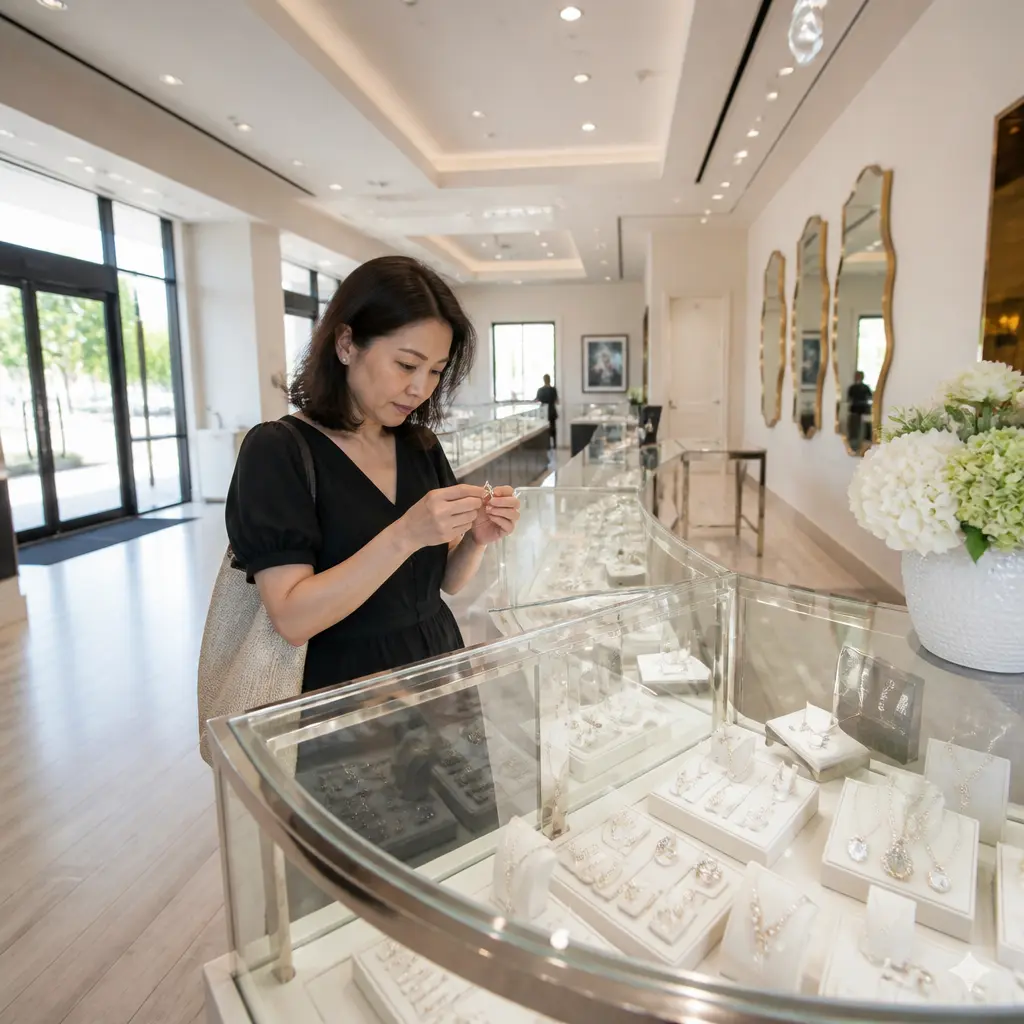
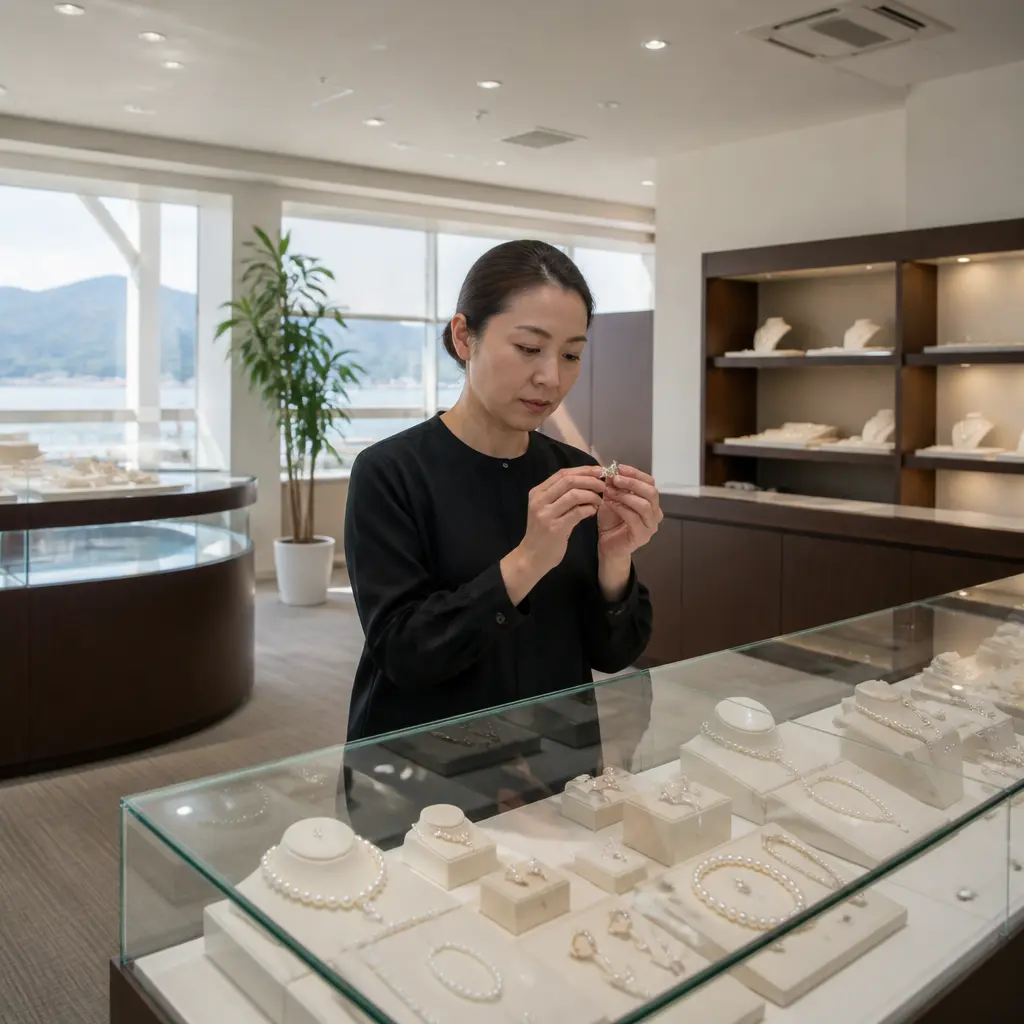
Pearl settings are the metal mountings and design structures that secure a pearl while shaping how prominently it appears. The simplest approach—slender prongs, a discreet bezel, an open pendant, or a clean solitaire—lets the pearl remain the visual center. That restraint matters because pearls are relatively soft, with a Mohs hardness of approximately 2.5 to 4.5 according to the Gemological Institute of America (GIA). This guide explains how proportion, metal color, setting type, and protective details can support rather than overpower a pearl, with practical examples covering rings, earrings, pendants, and understated vintage-inspired designs.
Showcasing Pearl Settings Through Proportion and Restraint
The entity-attribute pairing in this discussion is pearl settings: the entity is the pearl jewelry mounting, and the attribute is its ability to frame, protect, and visually prioritize the pearl. A setting includes the components that hold the gem in place, such as prongs, bezels, baskets, galleries, posts, and pendant bails. GIA’s jewelry education materials emphasize that a mounting must balance security, wearability, and appearance; for pearls, that balance is especially important because nacre can scratch, abrade, or lose luster more easily than many mineral gemstones.
A pearl-forward setting usually has three characteristics: limited visual competition, enough negative space to outline the pearl, and a scale that matches the pearl rather than exceeding it. These principles apply across the main hyponyms of the category: solitaire settings, bezel settings, halo settings, cluster settings, stud earrings, drop earrings, and open pendants. The right choice depends on whether the priority is maximum visibility, additional protection, movement, or a more decorative silhouette.
Solitaire Pearl Settings Define the Center of Attention
A solitaire pearl setting features one principal pearl with little or no surrounding ornament. It is the clearest design for allowing shape, surface, color, and luster to speak for themselves. A narrow band and small, well-spaced prongs create an especially quiet frame, while a raised basket can give the pearl a floating appearance.
Solitaire designs work best when the pearl has a strong individual presence. GIA evaluates pearls using characteristics such as size, shape, color, luster, surface quality, nacre quality, and matching; an uncluttered setting makes those qualities easier to see. For a ring, however, a low-profile solitaire may be more practical than a tall one because rings encounter frequent contact with hard surfaces.
Minimal Bezel Settings Add Protection Without Visual Weight
A bezel setting surrounds the pearl’s edge with a rim of metal. This construction can protect part of the pearl’s circumference and produce a smooth, modern outline. A partial bezel or cup-style mount is often more suitable for pearls than a fully enclosed design because it can preserve the pearl’s visibility while allowing inspection and cleaning.
The key measurement is the proportion of metal to pearl. A thin rim that follows the pearl’s contour supports the shape; a broad, heavy rim can make a delicate pearl appear smaller. White gold, platinum, and silver tend to recede around white or silver-toned pearls, while yellow gold can create a warmer contrast around cream, golden, or peach pearls.
Protecting Pearl Settings While Preserving Their Luster
Pearl settings must protect a vulnerable surface without covering the feature that makes the gem attractive. Unlike diamond or sapphire, a pearl is an organic gem formed from layers of nacre. GIA reports that pearl hardness is approximately 2.5 to 4.5 on the Mohs scale, so abrasive contact, rough storage, and harsh chemicals can cause visible damage.
Low-Profile Prongs Reduce Contact and Emphasize Shape
Prongs are small metal claws that hold the pearl at selected points. Low-profile prongs are useful when the design goal is openness: they expose more of the pearl’s surface and allow light to reach it from multiple angles. The prongs should be smooth, evenly finished, and properly fitted so they do not create pressure points or snag clothing.
For frequently worn pearl rings, a jeweler may recommend protective shoulders, a surrounding gallery, or a design that places the pearl slightly below the hand’s most exposed plane. These details do not need to be decorative. Their value is functional: they reduce accidental impact while maintaining a clean outline.
Closed Backs and Secure Posts Support Everyday Earrings
Pearl earrings commonly use posts, push backs, screw backs, or lever backs. A secure back is especially important for valuable pearls because losing an earring can be more likely than damaging one during ordinary wear. A closed cup or supportive gallery can stabilize the pearl while remaining visually hidden from the front.
Stud earrings are among the most restrained options because they place the pearl directly beside the face without adding a competing motif. Drop earrings introduce movement and can make a smaller pearl appear more prominent, but the metal framework should remain light. A short drop with a simple hook or hinged fitting usually keeps attention on the pearl rather than the hardware.
Matching Pearl Settings to Design Style and Pearl Type
The best pearl setting is not determined by size alone. It should respond to the pearl’s shape, color, surface character, and intended use. The Federal Trade Commission recognizes cultured pearls as genuine pearls when they are produced through human-assisted cultivation, so cultured freshwater, Akoya, Tahitian, and South Sea pearls can all deserve thoughtful, pearl-first settings.
Open Pendants Let Large or Baroque Pearls Remain Distinctive
An open pendant uses a small bail, cap, or discreet wire structure to suspend the pearl below a chain. This is particularly effective for baroque pearls, whose irregular forms are central to their identity. Instead of disguising asymmetry with a heavy frame, an open design presents the outline as an intentional feature.
A pendant also reduces the amount of hard contact that a pearl may experience compared with a ring. Even so, the attachment point must be well constructed, and the pearl should not swing against a metal charm or another gemstone. A simple chain in a matching or deliberately contrasting metal can complete the design without crowding it.
Halo and Cluster Settings Require Controlled Contrast
A halo setting places smaller stones around a central pearl, while a cluster setting groups multiple pearls or gemstones into a larger motif. Both are valid hyponyms of pearl settings, but they are less minimalist than a solitaire or open pendant. To keep the pearl dominant, the surrounding stones should be smaller, lower in contrast, or spaced with visible breathing room.
A useful visual decision chart is: solitaire for maximum focus, bezel for a smooth protective outline, open pendant for movement and organic shapes, stud for daily simplicity, and halo or cluster for formal decoration. This hierarchy helps prevent a common design problem: adding detail because the setting feels empty, then discovering that the pearl no longer leads the composition.
Metal Color Should Frame Rather Than Compete
Metal color influences perceived contrast. White metals tend to create a continuous, quiet field around white, silver, and pale pink pearls. Yellow gold can emphasize warmth in cream and golden pearls, while rose gold may echo peach or pink overtones. These are design tendencies rather than strict rules; luster and surface quality can matter more than body color when the pearl is viewed closely.
A practical test is to view the pearl against the proposed metal in both daylight and indoor light. If the metal is the first feature noticed, reduce its width, polish, ornament, or contrast. If the pearl appears flat, a warmer metal or a small amount of negative space may provide definition without adding gemstones.
Applying Simple Pearl Settings in Real Jewelry Choices
Consider three practical cases. For a daily-wear ring, a low-profile bezel or protected cup setting offers greater security than a tall, exposed mount. For a formal necklace featuring a large South Sea pearl, an open bail and unadorned chain preserve scale and luster. For irregular freshwater pearls, a minimal drop setting highlights individuality instead of forcing the pearl into a perfectly symmetrical frame.
Historical practice supports this preference for adaptable simplicity. GIA’s accounts of cultured pearl development note the importance of Kokichi Mikimoto’s late-nineteenth-century work in making cultured pearls widely available. As pearls became more accessible, designers used them in everything from restrained studs to elaborate Art Deco compositions. The continuing lesson is that the setting should reflect the pearl’s character and the wearer’s lifestyle, not merely follow a decorative trend.
Care should also influence the choice. The American Gem Society recommends putting pearls on after cosmetics and fragrances, wiping them with a soft cloth after wear, and storing them separately from harder jewelry. These habits extend the value of a simple setting because a clean, undamaged pearl needs less visual embellishment to appear luminous.
Conclusion: Pearl Settings Keep the Design Focused
Pearl settings succeed when their attributes—proportion, security, metal color, and negative space—support the pearl’s natural identity. Solitaire and open settings provide the strongest focus; bezels and low-profile mounts add protection with limited visual weight; studs and short drops offer everyday clarity; and halos or clusters work when decoration is carefully controlled. Because pearls measure only about 2.5 to 4.5 on the Mohs scale, thoughtful construction and proper care are as important as appearance. When selecting or commissioning a piece, compare the pearl and setting together in natural light, ask how the mount protects the surface, and choose the simplest structure that makes the pearl look unmistakably beautiful.
Sources: Gemological Institute of America, “Pearl Quality Factors,” https://www.gia.edu/pearl-quality-factor; Gemological Institute of America, “Pearl Care and Cleaning,” https://www.gia.edu/pearl-care-cleaning; Federal Trade Commission, “Jewelry Guides,” https://www.ftc.gov/legal-library/browse/rules/jewelry-guides; American Gem Society, “Pearl Care and Cleaning,” https://www.americangemsociety.org/pearl-care/; Gemological Institute of America, “The History of Cultured Pearls,” https://www.gia.edu/pearl-history; Gemological Institute of America, “Mohs Scale of Hardness,” https://www.gia.edu/gem-encyclopedia/mohs-scale