Pearls are organic gemstones formed when layers of nacre, a crystalline material produced by oysters and other mollusks, build around an irritant. Their relatively soft, layered surface makes them especially vulnerable to perfume, cosmetics, hairspray, alcohol, acids, and household cleaners. The Gemological Institute of America (GIA) rates pearl hardness at approximately 2.5 to 4.5 on the Mohs scale, far below quartz at 7, so routine chemical exposure can dull nacre, weaken coatings, or cause discoloration. The safest practice is simple: apply personal-care products first, allow them to dry, then put on pearls; remove pearls before cleaning, swimming, exercising, or using sprays.
Chemical Sensitivity Protects Pearls From Perfume, Makeup, and Everyday Chemicals
Chemical sensitivity in pearls means that the nacre and any underlying organic layers can react adversely to substances that alter, dissolve, stain, or abrade the surface. GIA describes pearls as organic gems with a nacre structure rather than the single-crystal structure found in diamonds, rubies, or sapphires. That layered construction contributes to their distinctive luster but also makes them less resistant to scratching, heat, dehydration, and chemical attack.
The most important exposure categories are fragrance chemicals, makeup and skincare products, acidic or alcoholic substances, chlorine and salt water, and domestic cleaning agents. Chemical damage may appear as reduced luster, a chalky or cloudy surface, peeling of a nacre coating, yellowing, dark spots, or an unpleasant change in surface texture. Damage is often cumulative rather than dramatic: repeated small exposures can gradually make pearls look dull.
Pearl Nacre and Surface Vulnerability
Nacre is composed mainly of calcium carbonate crystals held together by organic proteins. This structure gives pearls their orient, or subtle play of color, but it is softer and more chemically vulnerable than many mineral gemstones. According to GIA, pearl hardness is generally 2.5 to 4.5 on the Mohs scale. Dust particles, which commonly contain quartz with a hardness of about 7, can therefore scratch a pearl during wiping or storage.
Pearls should not be treated as waterproof jewelry. Moisture alone is not always harmful, but prolonged wetting, drying, heat, and contact with chemicals can affect the nacre or the silk thread used in many pearl strands. The American Gem Society recommends keeping pearls away from cosmetics, perfume, hairspray, and other chemicals and wiping them with a soft cloth after wear.
Perfume, Hairspray, and Alcohol-Based Fragrances
Perfume and hairspray are concentrated mixtures that may contain alcohol, fragrance compounds, fixatives, colorants, and other solvents. Spraying them directly over a pearl strand can leave residue on the nacre and repeatedly expose the surface to solvents. Fragrance should be applied to skin or clothing before jewelry is worn, and the product should be allowed to dry completely.
A practical order of dressing is “pearls last, pearls first off.” Put on earrings, necklaces, bracelets, or rings only after perfume, hairspray, deodorant, sunscreen, and moisturizer have dried. Remove them before refreshing fragrance or styling products. This precaution is particularly important for vintage pearls, pearls with thin nacre, and pieces with dyed or treated surfaces.
Makeup, Skincare, and Sunscreen Residue
Foundation, powder, blush, eye makeup, facial oils, creams, and sunscreen can accumulate in the microscopic irregularities of nacre or around drill holes and clasps. Some formulas include pigments, oils, acids, preservatives, or mineral particles that may stain the silk thread, leave a film, or increase scratching during cleaning.
The safest method is to keep pearls away from the face and neck until makeup and skincare are fully settled. After wearing them, gently wipe each pearl with a clean, soft, slightly damp cloth. Do not use makeup remover, micellar water, alcohol wipes, jewelry dip, toothpaste, baking soda, or commercial silver polish. These products are designed for other materials and may strip, scratch, or chemically alter nacre.
Chlorine, Salt Water, Sweat, and Acids
Swimming pools are a significant risk because chlorine-based disinfectants can attack organic materials and metal components. Ocean water is less chemically aggressive than many household cleaners, but salt crystals, sand, sunscreen, and prolonged moisture can still scratch or soil pearls. Sweat contains water, salts, and naturally occurring acids, so pearls worn during exercise should be wiped promptly afterward.
Pearls should be removed before swimming, bathing, showering, exercising, or entering a hot tub. They should also be kept away from vinegar, lemon juice, wine, carbonated drinks, and acidic food residues. If a spill occurs, blot rather than rub, then wipe the jewelry with a soft cloth lightly dampened with clean water and allow it to air-dry flat.
Cleaning Protects Pearls From Chemical and Abrasive Damage
Pearl cleaning is a residue-removal process, not a polishing process. Because nacre is comparatively soft, the goal is to remove oils and debris without adding friction or introducing solvents. The National Association of Jewelry Appraisers and major gemological organizations generally favor gentle wiping and professional inspection over aggressive home cleaning.
Safe At-Home Pearl Cleaning
- Place the pearls on a clean, soft towel away from sinks and hard surfaces.
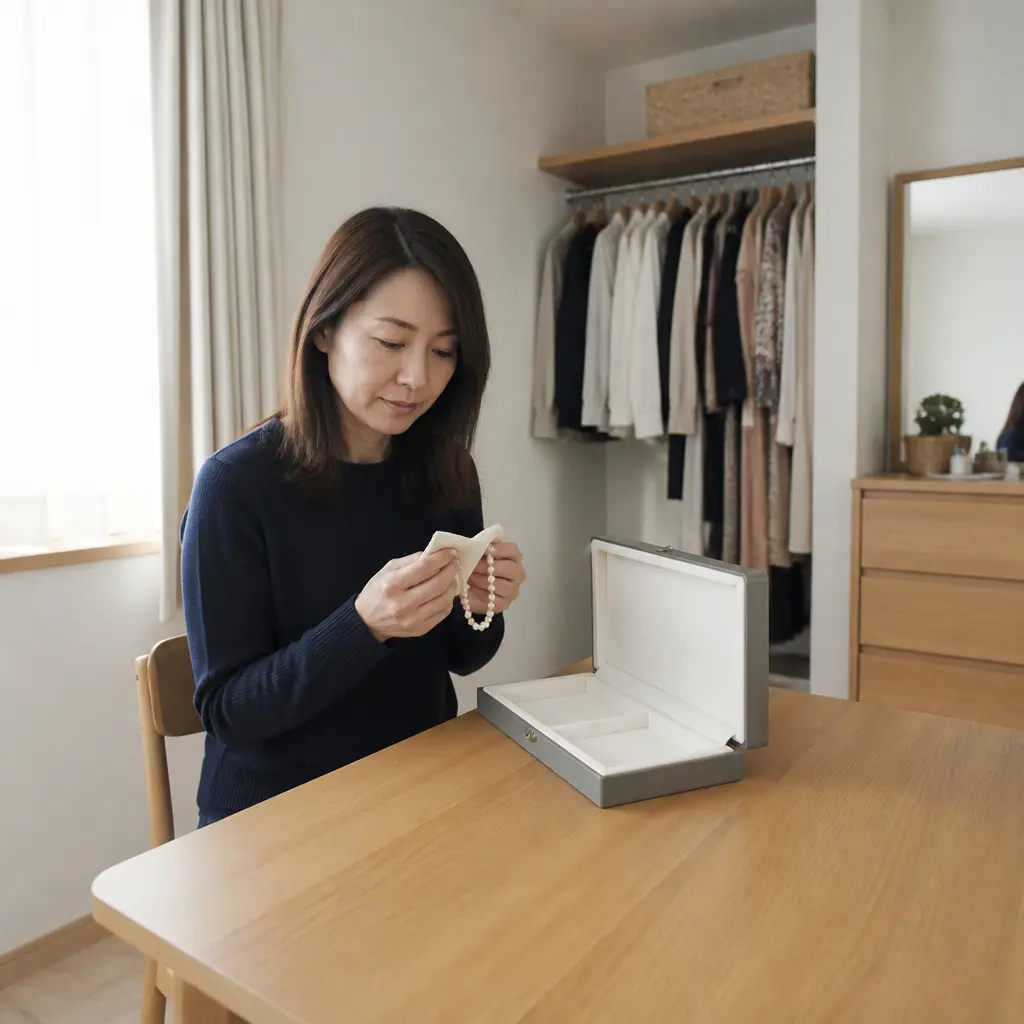
- Wipe each pearl with a soft cotton or microfiber cloth after every wear.
- For visible residue, lightly dampen the cloth with lukewarm water. Avoid soaking the strand.
- Wipe gently without scrubbing, brushing, twisting, or pulling the silk thread.
- Let the jewelry dry naturally while laid flat before storing it.
Never use an ultrasonic cleaner or steam cleaner on pearls unless a qualified professional who understands the specific piece explicitly approves the procedure. Heat, vibration, and moisture can damage nacre, loosen settings, or weaken adhesives used in pearl jewelry.
Professional Inspection and Restringing
Pearl strands should be inspected periodically for stretched, frayed, or discolored silk. The ideal interval depends on how often the strand is worn, but frequently worn necklaces may benefit from professional restringing about once a year. A knot between each pearl can reduce loss if the strand breaks and limits pearl-to-pearl contact.
A jeweler or gemologist should examine pearls that have become chalky, cracked, peeling, severely discolored, or unusually rough. Do not attempt to recoat, bleach, polish, or chemically brighten pearls at home. Treatments that improve appearance temporarily may remove nacre or reduce long-term value.
Storage Preserves Pearl Luster After Everyday Wear
Storage protects pearls from friction, dehydration, dust, and accidental chemical contact. Keep each piece in a soft pouch or a fabric-lined compartment rather than in a loose box with diamonds, gemstones, or metal jewelry. Harder materials can scratch nacre, while sharp edges can chip drilled holes or catch the strand.
Temperature, Humidity, and Light
Pearls contain organic components and should be protected from prolonged heat, direct sunlight, radiators, hot cars, and very dry environments. Excessive dryness may contribute to cracking or deterioration of the organic binder, while abrupt changes in temperature can stress nacre. Normal indoor conditions are generally preferable to sealed containers with drying agents.
Avoid storing pearls in airtight plastic for long periods, especially if condensation or fluctuating temperatures are possible. Keep them in a breathable soft pouch, away from perfumes, cosmetics, cleaning products, and treated leather whose dyes or finishes could transfer to the nacre.
A Practical Pearl-Care Routine
- Apply perfume, hairspray, makeup, moisturizer, and sunscreen before putting on pearls.
- Remove pearls before bathing, swimming, exercising, sleeping, or cleaning.
- Wipe them with a soft cloth after every wear.
- Store them separately in a soft, breathable pouch or lined compartment.
- Keep them away from acids, chlorine, alcohol sprays, solvents, abrasives, and heat.
- Arrange professional inspection and restringing when the thread shows wear or the pearls are worn frequently.
Conclusion: Chemical Sensitivity Determines Pearl Care
Pearls combine delicate nacre with organic material, which explains both their exceptional luster and their sensitivity to perfume, makeup, sweat, chlorine, acids, solvents, and abrasive dust. Their 2.5-to-4.5 Mohs hardness, reported by the Gemological Institute of America, means that ordinary household particles can scratch them more easily than many owners expect. The essential protections are to apply products before dressing, remove pearls before water-based or chemical activities, wipe them gently after use, and store them separately from harder jewelry.
These habits require little time but help preserve surface luster, nacre integrity, thread strength, and long-term value. For valuable, antique, treated, or visibly damaged pearls, consult a qualified gemologist or pearl specialist rather than using a commercial cleaner or home remedy.
Sources: Gemological Institute of America, “Pearl Quality Factors,” https://www.gia.edu/pearl-quality-factor; Gemological Institute of America, “Pearl Care and Cleaning Guide,” https://www.gia.edu/pearl-care-cleaning; American Gem Society, “Pearl Care and Cleaning,” https://www.americangemsociety.org/articles/pearl-care-and-cleaning/; Smithsonian Institution, “Pearls,” https://ocean.si.edu/ocean-life/invertebrates/pearls; National Association of Jewelry Appraisers, “Pearl Care,” https://najaappraisers.com/