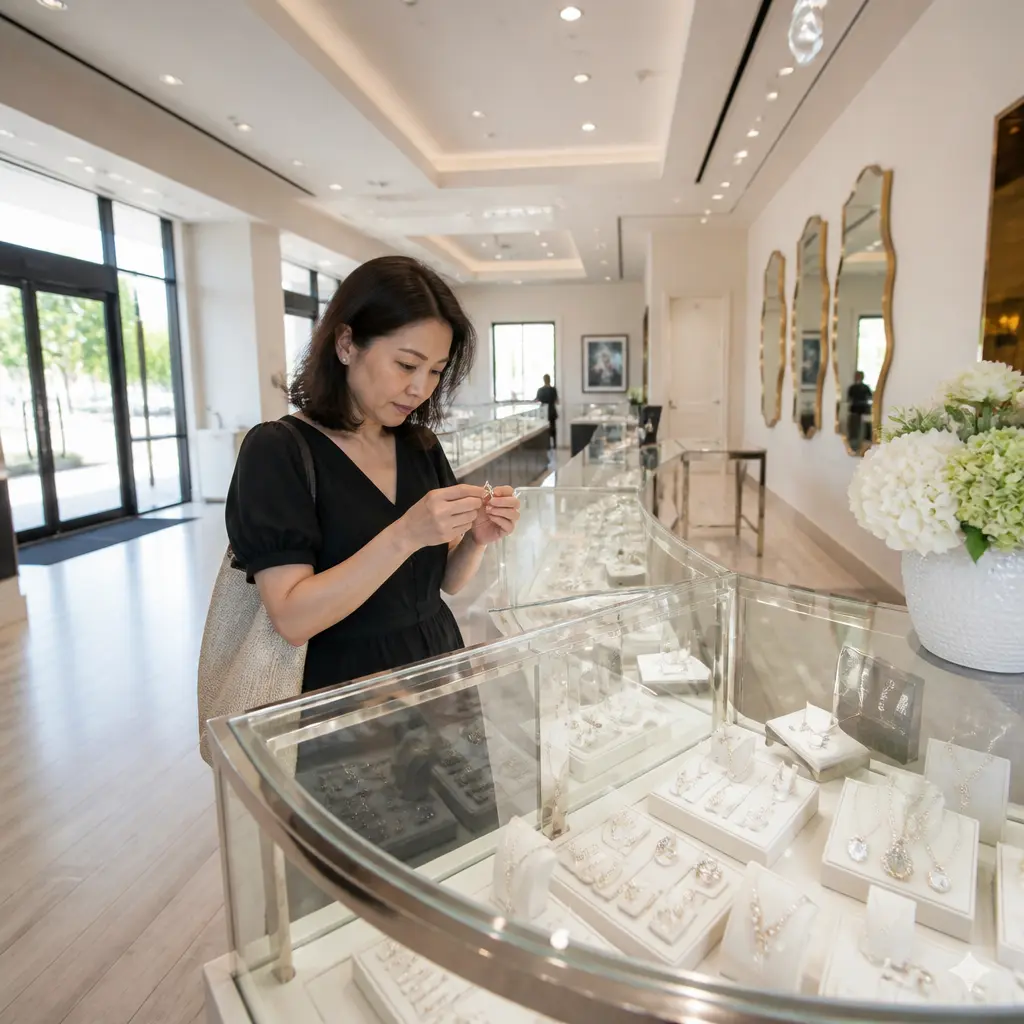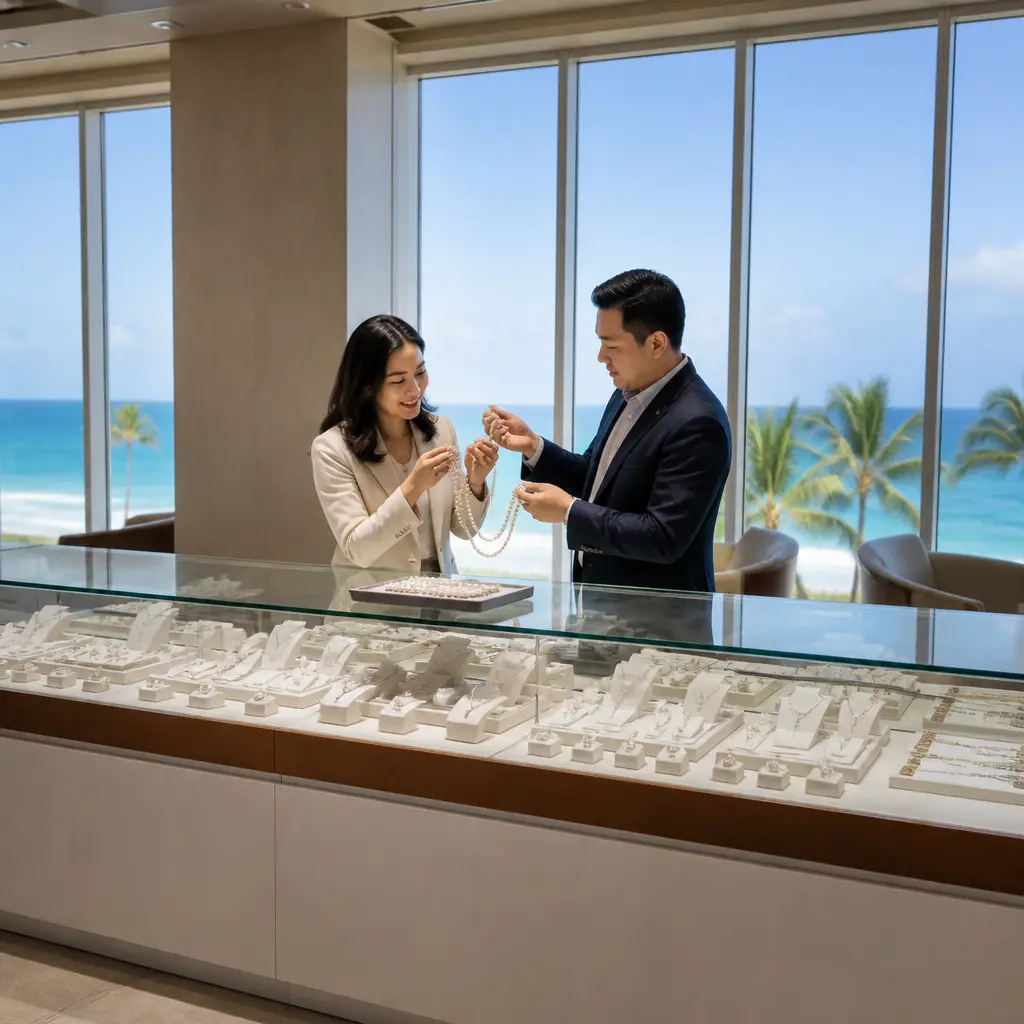
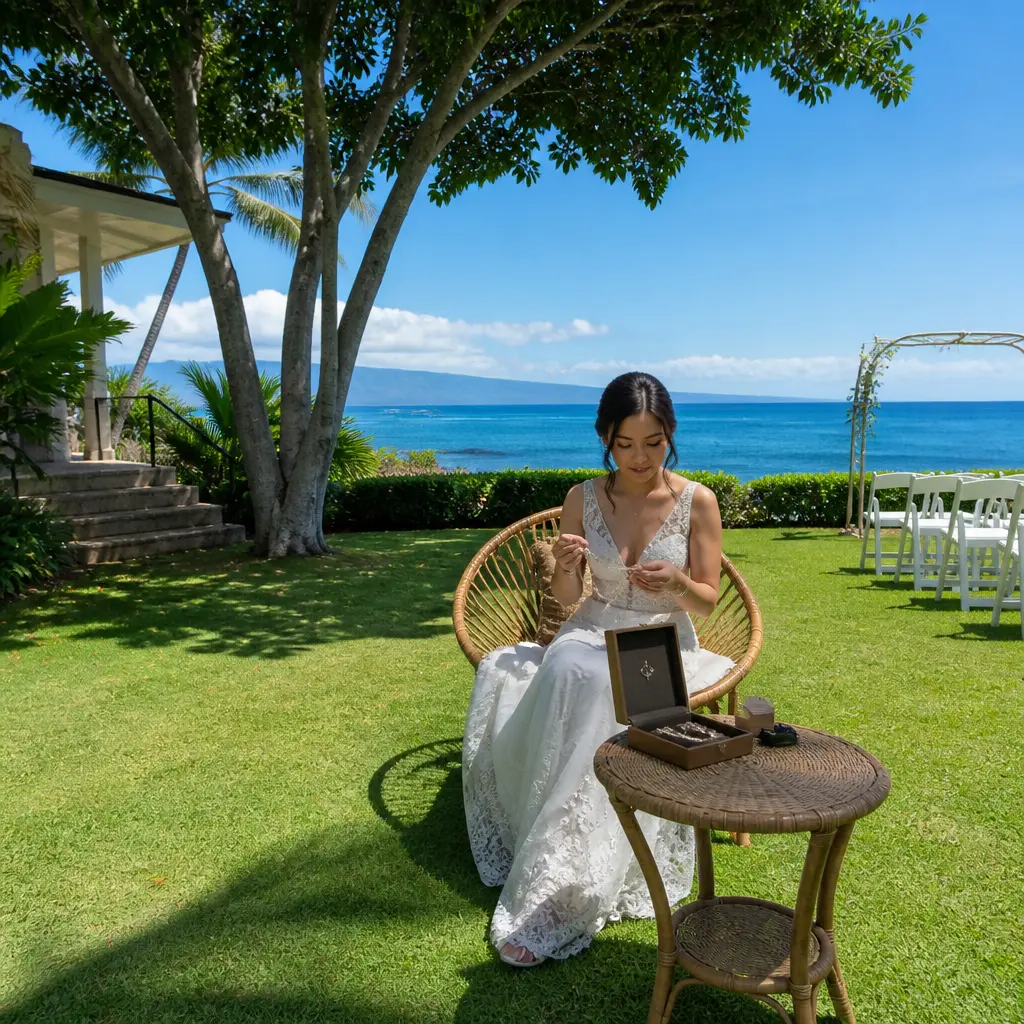
Pearl jewelry suitability is the degree to which a pearl piece matches an event’s setting, styling, comfort, and exposure conditions. For beach and garden weddings, the best choices are lightweight cultured pearls set in secure, corrosion-resistant metals and worn with sensible protection from saltwater, sand, sunscreen, perspiration, humidity, and direct sunlight. The Gemological Institute of America (GIA) rates pearl nacre at approximately 2.5 to 4.5 on the Mohs hardness scale, making pearls significantly more delicate than many gemstones. That characteristic explains why pearl type, setting, necklace length, earring design, metal selection, and aftercare all matter when choosing jewelry for an outdoor ceremony.
Pearl Jewelry Suitability for Outdoor Weddings
Pearl jewelry suitability can be defined as the practical and aesthetic compatibility of pearls with a particular wedding environment. In gemology, a pearl is an organic gem formed when nacre builds around an irritant inside a mollusk. The GIA distinguishes natural pearls, which form without human intervention, from cultured pearls, in which people introduce a nucleus or tissue to initiate pearl growth. Most pearls used in contemporary bridal jewelry are cultured, including freshwater, Akoya, Tahitian, and South Sea varieties.
For an outdoor wedding, suitability has two dimensions: visual harmony and environmental resilience. Beach pearl jewelry should complement open skies, flowing fabrics, and coastal colors without creating a risk of loss in sand or water. Garden pearl jewelry should coordinate with flowers, greenery, lace, and soft daylight while remaining secure during walking, photographs, and dancing. The American Gem Society identifies pearls as relatively soft and porous compared with many traditional gemstones, supporting the recommendation that they should be handled more carefully than diamonds, sapphires, or rubies.
Beach Pearl Jewelry
Beach pearl jewelry is pearl-based adornment selected for a coastal ceremony or reception. Freshwater pearls, white Akoya pearls, and lightly colored South Sea pearls are common choices because their luster reflects natural light and their colors work well with ivory, white, champagne, blue, and blush wedding palettes.
The beach setting requires practical restraint. Sand can scratch delicate surfaces and work into clasps, while saltwater and perspiration can affect metals, silk threading, and other components. A short pearl pendant, stud earrings, or a secure bracelet is usually more practical than a long, layered strand. Brides and attendants should also remove pearl jewelry before entering the ocean, even for photographs, because repeated exposure to saltwater and moisture is unnecessary.
Garden Pearl Jewelry
Garden pearl jewelry is pearl adornment chosen for a botanical, estate, vineyard, or park setting. It often favors romantic forms such as pearl drop earrings, floral brooches, delicate pendants, and mixed pearl-and-metal designs. Freshwater pearls are particularly versatile because they are available in round, oval, button, and baroque shapes, allowing a bride to select either a traditional or organic appearance.
A garden setting can expose jewelry to humidity, grass, pollen, perspiration, and sudden rain. Secure lever-back or hinged earrings are safer than open hooks, and necklace clasps should be inspected before the ceremony. The visual principle is balance: a heavily embellished gown may need simple pearl studs, while a minimalist dress can support a more prominent strand or sculptural drop earring.
Pearl Type and Quality for Outdoor Bridal Jewelry
Pearl type describes the mollusk and growing environment that produced the pearl, while pearl quality refers to characteristics such as luster, surface condition, nacre quality, shape, size, and color. The GIA explains that luster, the sharpness and intensity of reflections on the surface, is one of the most important factors in judging pearl appearance. In outdoor photography, strong luster can help pearls remain visible in soft shade or bright daylight.
Freshwater Pearls
Freshwater pearls are cultivated primarily in freshwater mussels and are valued for their broad range of shapes and accessible price points. They are suitable for garden weddings, bridesmaid jewelry, and coordinated family gifts. Baroque freshwater pearls can provide an organic, botanical look, while round freshwater pearls offer a more conventional bridal style.
Akoya, Tahitian, and South Sea Pearls
Akoya pearls are commonly associated with round shapes, white to cream body colors, and pronounced luster, making them suitable for classic beach or garden ceremonies. Tahitian pearls are known for naturally dark body colors, including gray, green, peacock, and aubergine tones, and can complement an evening garden wedding or a modern bridal palette. South Sea pearls are typically larger and more visually commanding, with white, silver, or golden colors; a single pendant or pair of earrings can provide impact without the weight of a full multi-strand necklace.
Size should be selected in relation to the wearer and outfit rather than treated as a simple measure of value. A 6-to-7-millimeter strand offers understated formality, while larger pearls create a stronger focal point. A visual comparison chart for a wedding wardrobe could display pearl type, typical color range, approximate size category, formality, and outdoor styling suitability.
Pearl Jewelry Settings, Metals, and Secure Fastenings
A pearl setting is the metal structure or mounting that holds the pearl, while a fastening is the mechanism that keeps the jewelry on the wearer. These components are especially important outdoors because movement, wind, fabric snagging, and crowded photo sessions increase the chance of loss.
Metal Selection
Yellow gold creates a warm, traditional contrast with cream and golden pearls. White gold and platinum provide a cooler appearance that suits white Akoya pearls and contemporary gowns. Sterling silver can be attractive and economical, but it may tarnish more readily in humid or salty environments. The American Gem Society recommends keeping jewelry away from chemicals and cleaning products, and the same principle applies to sunscreen, hairspray, perfume, and insect repellent at an outdoor wedding.
Earring and Necklace Security
For earrings, screw backs, lever backs, and secure hinged closures generally offer more protection than simple push backs or open hooks. Necklace safety improves with a well-fitting clasp, properly knotted strands, and a length that does not catch easily on lace, hair, or bouquets. Brides should test the complete outfit before the wedding, including veil, hairstyle, neckline, and movement, because a comfortable design is less likely to be touched or adjusted during the ceremony.
Outdoor Pearl Jewelry Care Before and After the Wedding
Pearl care is the routine used to prevent damage, discoloration, scratching, and loss of luster. The GIA recommends putting pearls on after cosmetics and wiping them with a soft cloth after wear. This sequence is particularly important outdoors, where sunscreen, sweat, dust, and pollen can accumulate throughout the day.
- Inspect clasps, posts, knots, and pearl surfaces several days before the event.
- Apply skincare, sunscreen, fragrance, and hair products before putting on pearl jewelry.
- Keep pearls away from seawater, chlorinated pools, rain, sand, and direct contact with bouquets or rough fabric.
- Wipe each piece gently with a soft, dry or slightly damp cloth after use.
- Store pearls separately in a soft pouch, rather than in a hard jewelry box with diamonds or other abrasive gems.
- Ask a professional jeweler to restring frequently worn pearl necklaces; the appropriate interval depends on wear, strand construction, and knot condition.
Pearls should not be cleaned with ultrasonic cleaners, steam cleaners, abrasive compounds, or household chemicals unless a qualified professional confirms that every component is safe. The National Association of Jewelry Appraisers and major gemological organizations consistently emphasize that organic gems require care appropriate to their composition.
Choosing Pearl Jewelry by Wedding Role and Setting
The most suitable piece depends on the wearer’s role, the ceremony location, the dress neckline, and the expected activity level. A bride wearing a strapless or sweetheart neckline may use a short strand or pendant to frame the collarbone. A high neckline may look cleaner with pearl studs or drop earrings. Bridesmaids can wear coordinated freshwater pearl earrings in different shapes, allowing consistency without making every outfit identical.
- For a windy beach ceremony, choose studs, compact drops, and a secure clasp.
- For a formal garden ceremony, consider a graduated strand, pearl brooch, or refined drop earrings.
- For a casual coastal wedding, use baroque freshwater pearls with simple gold or silver accents.
- For an evening garden reception, consider Tahitian or golden South Sea pearls as a controlled color statement.
- For heirloom jewelry, have the piece professionally inspected and insured before travel.
Conclusion: Matching Pearl Jewelry Suitability to the Outdoor Setting
Pearl jewelry suitability depends on more than color or tradition. Beach pearl jewelry must account for sand, saltwater, wind, and secure fastenings, while garden pearl jewelry must address humidity, pollen, perspiration, and movement. Pearl type, luster, size, metal, setting, and care routine together determine whether a piece is both attractive and practical. Because pearl nacre is comparatively soft at approximately 2.5 to 4.5 on the Mohs scale, outdoor wedding jewelry should be worn thoughtfully and stored separately from harder gems.
Before purchasing or borrowing pearls, compare the wedding palette, neckline, ceremony conditions, and photography plans. Inspect every clasp and setting, keep cosmetics and chemicals away from the jewelry, and consult a qualified jeweler for valuable or heirloom pieces. These steps allow couples to enjoy pearls as elegant symbols of refinement without exposing them unnecessarily to the hazards of an outdoor celebration.
Sources: Gemological Institute of America, “Pearl Quality Factors,” https://www.gia.edu/pearl-quality-factor; Gemological Institute of America, “Pearl Care and Cleaning Guide,” https://www.gia.edu/pearl-care-cleaning; American Gem Society, “Pearl Buying Guide,” https://www.americangemsociety.org/pearl-buying-guide/; American Gem Society, “Jewelry Care and Cleaning,” https://www.americangemsociety.org/jewelry-care-cleaning/; National Association of Jewelry Appraisers, “Pearl Appraisal and Care Resources,” https://www.najaappraisers.com/.